


.jpg)
.jpg)

Door handle or wrist? Tips to no longer confuse them
Handle or Wrist of a door?
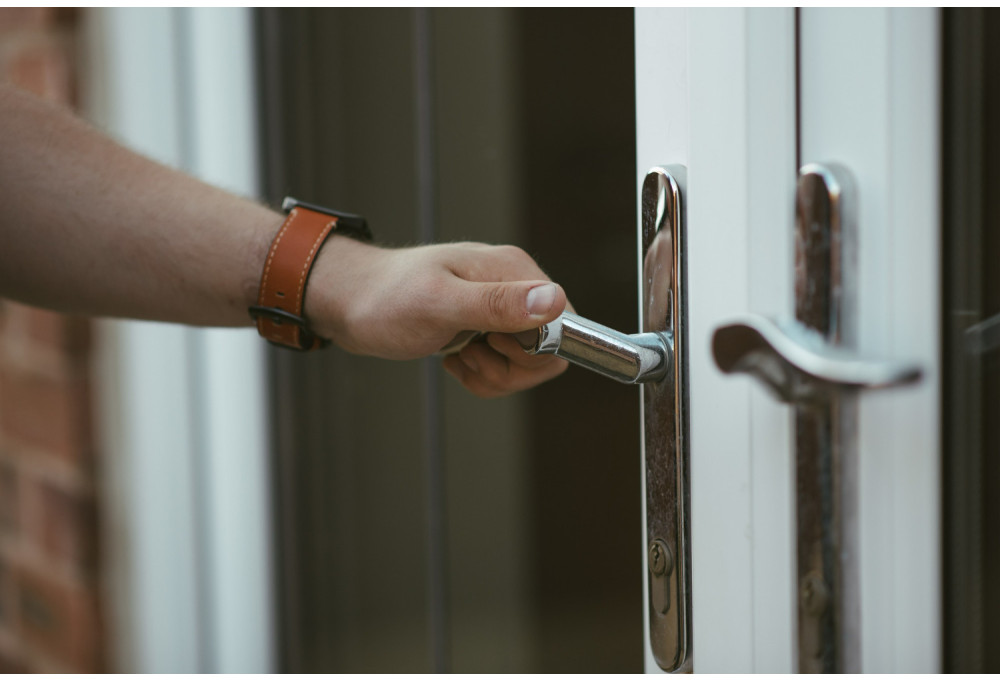
Handle or Wrist of a door?
"Handle" or "wrist" of a door? These two terms are often a source of confusion in our everyday language. The subtlety of their distinction sometimes escapes even the most discerning speakers. But what differentiates these terms and how can we distinguish them? Let's analyse them in more detail so we no longer make mistakes when talking about door handles.
Understanding the terms "door handle" and "door wrist"
An understanding of the terms "door handle" and "door wrist" enriches your expression and helps avoid any potential confusion. It brings more clarity to your communication.
Definitions
Let's first agree on the fundamentals. The term "handle" generally designates a device designed to be grasped by the hand, thus facilitating the manipulation, movement or opening of an object or mechanism. Conversely, the term "door wrist" expresses that flexible part between the hand and the forearm, which allows graceful and varied movements. Consider the "door handle" as being the door's lever, whilst the "door wrist" remains the fluid connection between you and the opening of the world. Let's start by dispelling these nuances to give you an idea of which term to choose.
- The door handle, the lever that enhances your door: The "handle", this visual and functional element, is much more than a simple accessory. It is the lever of your door that shapes the experience from the first contact. Opt for an elegant handle by exploring our complete collection of designer door handles and add an artistic touch to your space, a first impression that your guests will remember. Imagine yourself opening a door whose handle, like a work of art, invites you to enter in style. The handle is the main accessory of your door that showcases your personality and tastes.
- The door wrist, the personal connection with your space: This delicate part of the human body acts as an essential connection by linking the hand to the rest of the arm. Its function goes beyond simple anatomical junction, because the "wrist" allows fluid mobility, in other words, it allows your hand to move with remarkable ease. The door wrist is the part that reflects personal expression. It clearly emphasises its role in the dynamics of human movement.
Use in everyday life
Think about your typical day: opening a door using a handle is a gesture so ingrained in our routine that it may seem automatic. But how do you choose the right interior door handle? However, using the "handle" instead of the "wrist" could make this action awkward. Moreover, expressions such as "love handles" or "handshake" reveal the crucial necessity of choosing the appropriate term. You wouldn't want your "handshake" to be interpreted as "love handles" in a different context. These concrete examples highlight why precision in the use of these terms is far from trivial. By grasping the distinction between "handle" and "wrist", you shape your everyday language and, by extension, your interaction with the world.
Practical tips to avoid confusion between "Handle" and "Wrist"
Differentiating the term "door handle" and "door wrist" can prove tricky, but with these practical tips, you'll have a memorable method.
Mnemonics
Let's explore mnemonics to make the difference between the terms "handle" and "wrist" as clear as day. "H as in Hold" for "handle", a simple way to remember its role in gripping objects. Associated with this, think of "W as in Wrist" for "wrist", which emphasises its articulated nature. These mnemonics aren't simply letter games. Rather, they're visual tools that will naturally anchor themselves in your memory.
For an even more practical approach, here's an easy-to-remember example. Visualise a "handle" as the grip of a door handle, as if you were firmly holding it to open or close a door. On the other hand, think of the smooth movement of your "door wrist" when you play a musical instrument. These images help you memorise the distinction between the two terms, and it's both entertaining and practical!
To go further on this subject, read our article on the different types of interior handles
By adopting these mnemonics, you'll never see a "door handle" or a "door wrist" in the same way again. Transform a linguistic puzzle into a memorable adventure thanks to these tips that will naturally integrate into your daily life.
Contextualisation
Contextualisation helps you refine your understanding between the term "handle" and "wrist". Consider context as a compass that guides you towards the appropriate choice.
Let's take a concrete example: when you grasp a cup, you use your "wrist". When walking through a sculpture exhibition hall, you admire a magnificent piece where an artist's hand delicately grasps a form; here, you can associate this work with a "handle". On the other hand, visualise a sculpture representing the movement of the "wrist" with elegance. These specific examples demonstrate how context dictates the choice between the word "wrist" and "handle".
By incorporating contextualisation into your thinking, you easily understand the use of the terms "handle" and "wrist" and take advantage of each interaction to put your knowledge into practice.
In short …
You have explored in depth the subtlety between the terms "handle" and "wrist". By understanding their definitions, contextualising them in everyday life and using practical mnemonics, you are now armed to avoid any confusion. These nuances, often overlooked, influence our language and our perception of the world around us. By choosing judiciously between "handle" and "wrist", you improve your personal expression and clarify your communication. Why not put this clarity into practice in your daily life? Discover our shop and explore our exclusive collection of door handles that combine functionality and aesthetics.

Comments
No comments yet!
Leave your comment