


.jpg)
.jpg)

How to accurately measure the centre distance and fixing centre distance of a door handle?
Understand the difference between a "centre distance" and a "fixing centre distance" through this practical guide
Understand the difference between a "centre distance" and a "fixing centre distance" through this practical guide
Before investing in a new door handle for your house or flat, it is essential to understand the technical terms associated with this equipment. Not only will this enable you to ask relevant questions to an ironmongery professional, but you will also be better prepared for your online research, exploring the product ranges offered by different manufacturers. One of these questions: how to accurately measure the centre distance and fixing centre distance of a door handle? Let's discover together each definition and each purpose of these elements through this article.
Definition and significance of centre distance and fixing centre distance
What is the centre distance of a door handle?
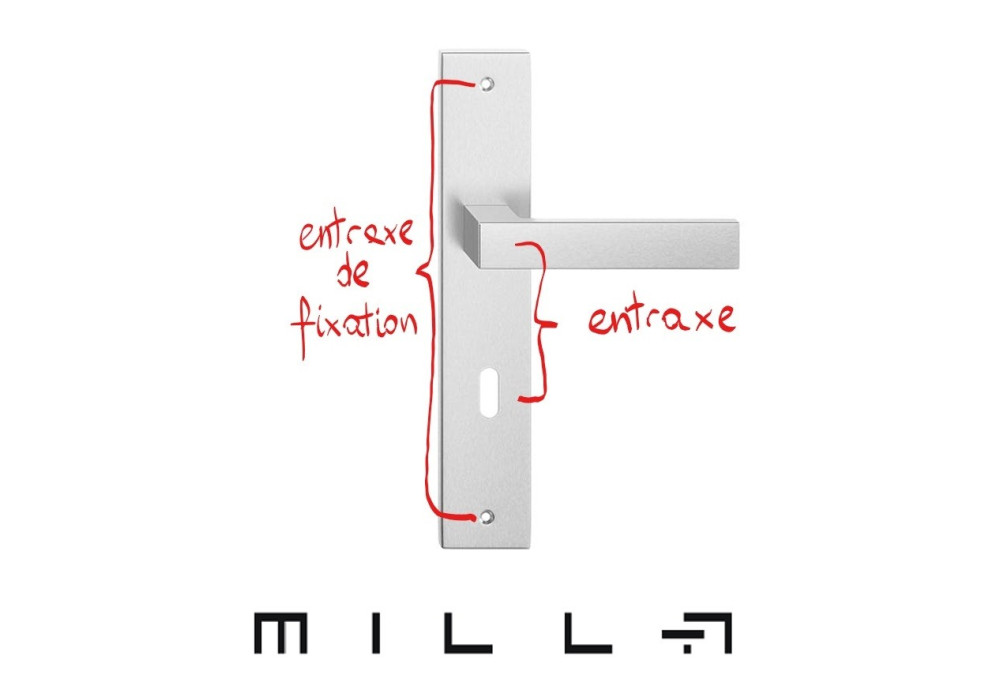
Before purchasing or replacing a door handle, it is essential to distinguish between three crucial measurements, the first being the centre distance. This term refers to the distance between the centre of the handle spindle (follower) and the centre of the hole intended for the key, cylinder or spindle of a bathroom lock. The most common values for centre distance are 70, 72, 85, 90 or 92 millimetres, with specific requirements for different markets:
- 70 mm centre distance: Standard in force for entrance doors and for interior handles in France
- 72 mm centre distance: German and Belgian standard
- 92 mm centre distance: Suitable for aluminium or metal doors
- 85 mm centre distance: Italian standard
- 90 mm centre distance: Used in Poland
It is crucial to note that both the centre distance and the spindle are measured relative to the axis of rotation of the handle and the key in the door lock.
The fixing centre distance of the door handle:
The fixing centre distance, on the other hand, represents the distance between the bolts that fix the metal handle to the door wood. Specifically, it is the distance between the top hole and the bottom hole (on the backplate). This measurement is of paramount importance as it must correspond to the mortice lock for effective fixing.
Please Note: A mortice lock fits perfectly within the thickness of the door, remaining invisible to offer a more aesthetic appearance.

The fixing centre distance for handles on a longitudinal plate intended for the French market is generally 165 mm or 195 mm (the most common), although some may measure 210 mm. When purchasing a new door lock, it will already be equipped with pre-existing holes for small spare parts such as M4 through screws. These through fixings are recommended as they create balanced pressure on certain types of interior handles. Generally, the fixing centre distance is wide enough to allow the fixing screws to pass above and below the lock.
If you are considering not replacing the old door lock, but only the handles, it is advisable to choose handles with similar specifications (centre distance, fixing centre distance, spindle) to avoid any unpleasant surprises during installation. When replacing old handles with new, more designer handles, it is essential to choose a handle with a fixing centre distance that remains the same to avoid drilling new holes in the door and thus weakening its structure.
WARNING: Old door locks do not have holes in their mechanism for M4 fixing screws! It is therefore crucial to replace the old door lock if you plan to change longitudinal handles to backplate handles, where the fixing centre distance is approximately 38 mm.
Practical advice
Taking precise measurements of a door handle
To accurately measure the distance between the handle and the key hole (centre distance), use the right tools such as a tape measure or ruler and take care to check the dimensions carefully. Our diagram will guide you on the optimal location to take these measurements:

Adjusting the handle plate to the lock
When the centre distance values conform to standards, it is possible to use standard longitudinal plates. However, if the lock spacing differs from standard values, it may be necessary to opt for a backplate handle, consisting of a handle with a separate backplate and plate for greater ergonomics.

Before making a purchase, it is imperative to check the door lock dimensions with precision. Careful measurement will ensure optimal adjustment of the lock with the newly installed backplate and handle, in order to operate the door opening smoothly.

Replacing handles and their plates is a relatively simple operation, but it can truly transform the appearance of your doors. A slight modification using products available from the MILLA shop can bring a touch of sophistication and elegance to your interior design.

Explore our extensive range of door handles without delay, available in a multitude of finishes such as matt black, gold, polished brass, chrome, zamak, brushed stainless steel, bronze, satin, lacquered, and much more for a designer interior! You will undoubtedly find the perfect finish to harmonise your decorative style and preferences. With the right measurements in hand, you'll be ready to choose and install door handles that enhance both the aesthetics and functionality of your living space, precisely and wisely highlighting the centre distance and fixing centre distance.
Comments
No comments yet!
Leave your comment