


.jpg)
.jpg)

How to repair a sticking door handle?
Methods for repairing your door handle
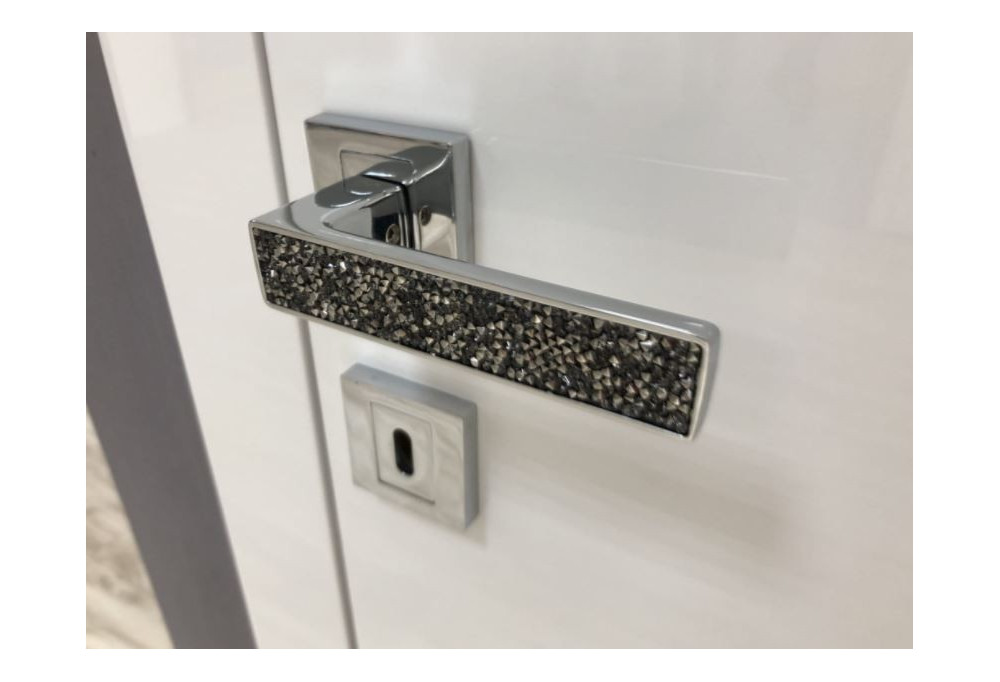
Methods for repairing your door handle

Nothing is more annoying than a door handle that does not work properly! A door handle is made to last over time. It sometimes happens that wear or renovation work leads to the handle malfunctioning.
How to repair a sticking door handle?
Here is a video demonstrating all the problems that our customers have encountered on their doors:
The causes of handle jamming are numerous but are found either at the level of the handle or within the lock. We will explain simply how to diagnose the origin of the problem and give you the methods to fix it without the intervention of a locksmith. Sometimes a simple screwdriver and a few turns of the wrist will be enough to carry out the repair.
How do you find the origin of the jam in your door handle? It's simple! There are 2 checks to carry out:
• the door handle (check its fitting or mechanism)
• the lock inside the door (faulty spring or mechanism)
We will go over the different cases of jamming and give you the appropriate methods for each one to repair your door handle easily.
To determine the nature of the problem encountered, the first thing to do is to remove the handles from the door. Indeed, you need to check that they are functioning correctly. If that is the case, the problem comes either from the fitting or from the locking mechanism.
Check your door handles

The handle is an essential piece of hardware, as it is used to open or close a door by releasing the half-turn latch (also called the latch bolt) from the strike plate, or conversely by helping it to engage with it. Several problems can hinder its proper functioning.

1. Loosen the fixing screws of your door handle
Overtightened handle fixings cause misalignment or jamming of the lever bearing against the face of the door, or compression of the locking mechanism inside the mortise, which can then no longer function correctly. Furthermore, the spindle (the transverse rod) of the handle can protrude from the rose if the screws are too tight and thus jam the mechanism.
Solution: Simply loosen the screws slightly, which frees up the space needed for the mechanism to operate freely. Operate the handles to check that they return to the horizontal position.
2. Check the alignment of the door handle spindle
When fitting the handles to the door, you must ensure that the transverse spindle of the handle is perfectly horizontal.
If the levers are not correctly aligned with one another, the spindle risks passing through the door at an angle and thus jamming the mechanism. The mounting screw holes may not be properly positioned or may even be misaligned.
Repair: Measure the alignment of the handles (ruler and level) and correct the screw positions if necessary to achieve a perfect face-to-face alignment of the fixing screw holes. Do not hesitate to replace the screws for a better hold.

3. Adjust the backset length of the door handle
The backset is the distance from the edge of the door to the axis of rotation of the square hole (follower) where the split spindle is inserted. Lock backsets are generally 40 or 50 mm. The spindle must be fixed at the correct backset to allow the handle mechanism to operate.
Solution: Take the measurements and position the square spindle on the correct axis whilst preserving a slight amount of play to ensure ease of movement of the handle.

Return spring: a key element for a functional handle
The majority of door handles are fitted with a return spring. This small mechanism, integrated into the handle or the lock depending on the model, allows the lever to return to the horizontal position once released. Without it, the handle remains in the down position or returns slowly, which can hinder daily use and accelerate wear of the system.
What should you do if the handle no longer springs back?
A handle that does not spring back is often a sign of a problem with the spring. Here are the possible causes and solutions to consider:
- Worn or broken return spring
Over time and with repeated use, the spring can lose its tension or break. In this case, the handle remains slack or drops all the way down without returning. If the spring is integrated into the handle, the entire handle will need to be replaced. Some lock models also contain a reinforced return spring, which can be a durable alternative. - Accumulation of dirt or lack of lubrication
Dust or lack of maintenance can hinder the mechanism. A simple clean and lubrication (with a grease suitable for metal) can sometimes restore proper functioning. - Incompatibility between handle and lock
If you have fitted a heavy handle onto a standard lock, the lock may not have sufficient power to ensure the return. It is then advisable to opt for a lock with a reinforced integrated spring, specially designed for this type of lever handle.
Before replacing anything, test by removing the handle and operating the square spindle: if it springs back on its own, the handle is the cause; if it remains stuck, the problem probably lies with the lock.
5. Check all the components of the door handle
The handle may jam due to a damaged or poorly lubricated part. Before dismantling the handle, check the latch (also called the half-turn latch or latch bolt — the bevelled metal part that engages with the strike plate and allows the door to close). Operate the handle to check that the latch moves freely.
As a second step, unscrew the handle screws to remove it from the door in order to check the condition of the spindle and the adapters. The age and wear of the handle may have damaged these elements, which are easy to replace.
Solution: Check all the components of the handle, in particular the spindle (the through rod) and its positioning in the follower (the hole in the lock through which the rod passes), the lever handle and the fixing screws). Do not hesitate to add lubricant to facilitate the smooth operation of the mechanism.
If the bolt does not retract and the problem persists, it is probably a faulty spring inside the lock.
Check the lock on your door

The handle may remain stuck due to a malfunction of the lock.
Before getting into the thick of it, here is a brief reminder of some key vocabulary from the world of locksmithing:
• A lock refers to the locking system itself. The lock can be operated with a key or a handle (lever handle or knob). It is the lock that allows the door to be locked.
• The cylinder (also called the barrel or lock cylinder) is the central component of the lock. It receives the key that is turned to trigger the opening and closing of the lock.
• The strike plate refers to the box fitted to the door frame into which the latch engages to close or lock a door.
• The latch (also called the bolt) refers to the metal piece that goes in and out of the lock when the mechanism is operated with the handle. The latch serves to keep the door closed when it engages with the strike plate.
We speak of a half-turn latch when the latch can be reversed to match the direction of the door. The deadbolt is used to lock the door.

6. How to replace a faulty spring in the lock
The lock mechanism includes springs that allow the handle to return to the horizontal position.
Most modern handles are fitted with return springs that work in conjunction with the springs of the lock. It is however important to ensure that the lock is fitted with springs strong enough to bring the handle back to the horizontal position, especially in the case of heavy handles or those of very good quality.
Some door handles do not have return springs. These require a lock fitted with robust springs, since the movement of the bolt depends solely on the force of those springs.
If too much pressure is applied, the spring can become dislodged, particularly if there is play in the lock body, or may even break.
Repair: Experienced DIYers will be able to dismantle the lock to reposition or replace the damaged spring. You need to open the lock body by lifting the clips located at the ends and centre of the body and position the spring in its place.
If the spring is broken, repair is compromised. Indeed, it may be difficult to find the same model on the market. In this case, you need to purchase a new lock for your peace of mind and security. Make sure to match the quality of the lock to the type of handles fitted on the doors of your home.
7. Check the door latch itself
You have bought new handles and the latch remains stuck? It can happen that the original installation is not suitable. The lock may also have been slightly moved and may no longer be positioned at a right angle, thus preventing the mechanism from functioning.
Solution: Remove the handles. Take the lock body out of the door and check whether the latch functions correctly when removed from the door. If the mechanism remains jammed, check that there is sufficient space for the movement of the bolt and that the parts are not catching on the wood of the door, for example. Finally, ensure the lock body and handles are properly aligned.
8. Check for debris in the door locking mechanism
During renovation work or a first installation, pieces of wood or other DIY debris can damage or even jam the lock mechanism as well as the bolt.
Tips: it is often enough to clean and remove debris for the lock to function again.
Conclusion: Repairing a broken handle does not require you to be a DIY expert! In the vast majority of cases, your door handle is not springing back either because there is a fitting fault or a problem with the return spring, or because the lock is defective.
What should you do if your door handle is still stuck?
If, despite all these checks, your handle remains stuck, you have no other choice but to proceed with replacing the door handle or the broken lock.
Replace your door handles
Milla Handles offers a wide range of designer door handles suited to all interior decoration styles at very attractive prices. A faulty handle can be a great opportunity to replace the handles in every room of the house! Think about matching designer window handles too!
Replace the lock on your door
Milla Handles also offers a wide choice of mechanical and magnetic locks. The magnetic lock is a top trend as the door becomes more design and closes silently (the bolt only engaging upon contact with the strike plate fitted with magnets).
Practical video tips for replacing your door handles
To visualise the fitting and repair of door handles, nothing beats a video!
Take advantage of our many tutorials which show in particular:
. How to easily install an interior door handle
. How to resolve problems encountered during the installation of your handles
In just a few minutes, you will learn how to install your door fittings (handle, door knob, cylinder or magnetic locks).
Also consult our articles on fitting handles and locks available on our blog.
If you need help repairing or installing your door handle, please do not hesitate to let us know by leaving a comment: our experts will respond with precision.
Entrust your DIY and décor projects to Milla Handles, the specialist in designer door handles!
Comments
No comments yet!
Leave your comment