


.jpg)
.jpg)
How to choose office furniture wisely?
Practical guide for optimal desk layout
Practical guide for optimal desk layout
Choosing the right office furniture is essential to create a comfortable, functional and aesthetic working environment. Whether it's a home office or a professional workspace, the furniture you choose influences not only your productivity but also your overall wellbeing.
Let's discover together the main criteria to consider when choosing your office furniture, from ergonomic needs to design trends, including space optimisation and budget compliance.
Identify your needs
The first step in choosing office furniture is to clearly identify your needs.
Define office use
You must first determine whether your office is intended for home working, in a professional setting, in an open-plan space or in a coworking office space... Obviously, a home office requires a different configuration from an office in a professional environment.
Number of users
Consider the number of people who will use the office. A shared desk, for example, requires more space and modular furniture to accommodate multiple users.
Type of work
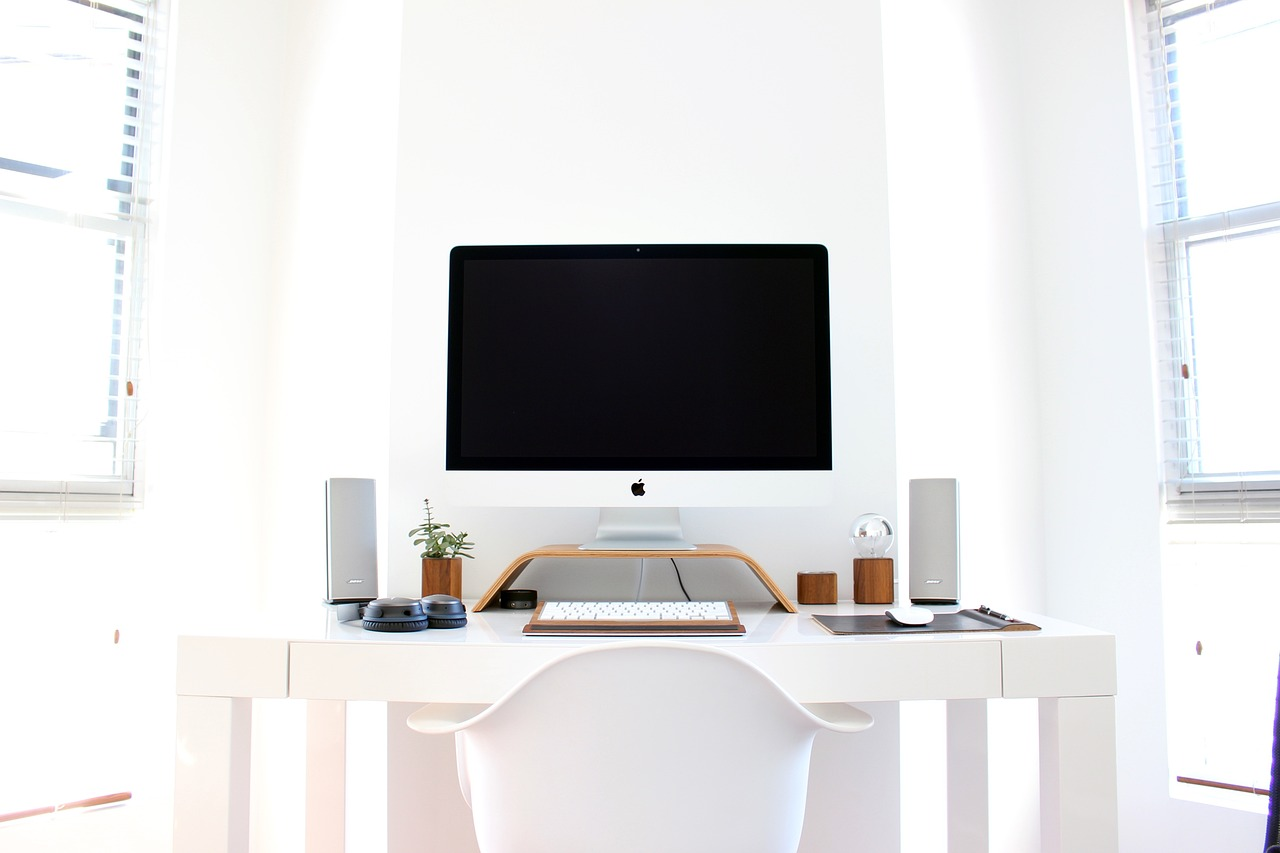
The type of work you do also influences the choice of furniture. For example, work requiring a lot of computer equipment will require a desk with a large surface and cable management options.
Office: ergonomics above all
If you spend all day behind a computer screen, it's best to be comfortably seated for both your health and productivity! Ergonomics is a crucial element in office layout.
Importance of ergonomics
Ergonomic office furniture helps reduce the risk of musculoskeletal disorders often caused by inadequate work postures. Ergonomic furniture helps maintain proper posture, thus reducing back, neck and shoulder pain.
Choice of seating
An ergonomic chair must be height-adjustable, provide good lumbar support and be made from breathable and durable materials. It is advisable to choose a chair with armrests and a swivel base for greater flexibility.
Working position
The desk height must be adapted to the user's size to avoid tension in the back and shoulders. The distance from the computer screen must be sufficient to avoid visual fatigue.
Types of office furniture
There are different types of office furniture suited to various needs and spaces.
Desks
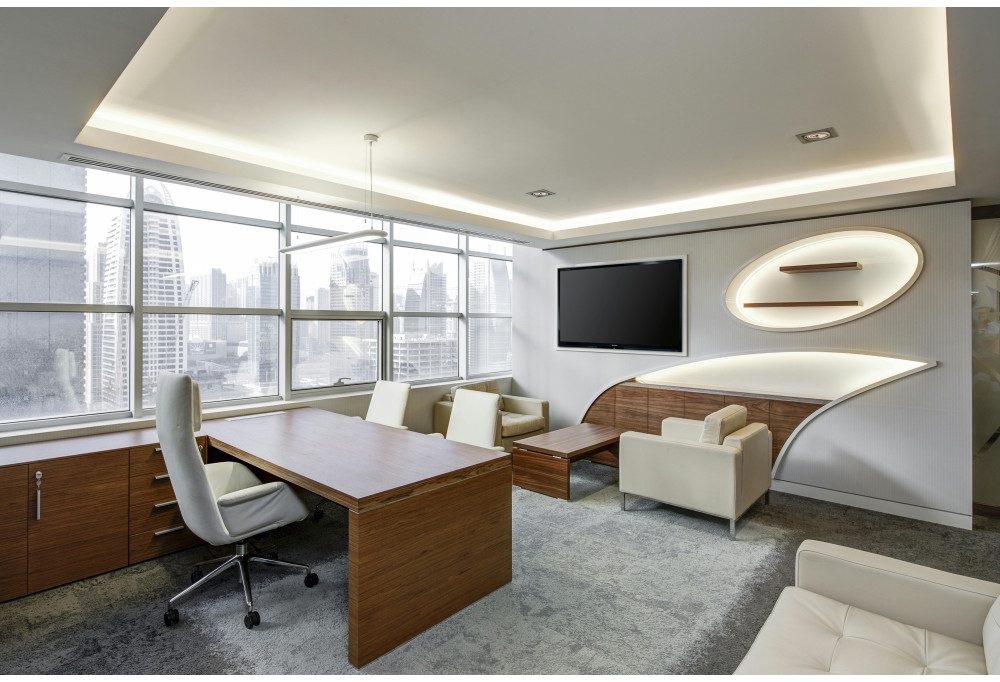
. Classic desks: ideal for traditional workspaces. Wooden desk or glass desk, you can choose from a wide range of functional and aesthetic desks. From a simple rectangular top to a designer desk with rounded shapes, choose the model according to the available space.
. Height-adjustable desks: allow you to work seated or standing, promoting better posture.
. Corner desks: perfect for maximising space in room corners, the corner desk offers a generous work surface
Office chairs
. Ergonomic chairs: essential for prolonged comfort. Some have a high tilting backrest for great freedom of movement
. Executive chairs: offer a luxurious and comfortable design.
. Stools and occasional seating: useful for specific tasks or visitors.
You can add options: removable or adjustable armrests, adjustable headrests, padding thickness and even a heating or massaging backrest option!
Storage
. Storage pedestals: practical for organising documents and supplies. Lockable or open-shelf depending on the intended use, the pedestal can also be used to place office equipment.
. Shelves: freestanding or wall-mounted, they offer vertical storage solutions.
. Cupboards and bookcases: a tambour-door cupboard offers extensive shelving for storing files, whilst a bookcase accommodates books as well as decorative objects.
The design and aesthetics of an office
The design of office furniture plays an important role in creating a pleasant working environment.
Importance of design
A well-designed workspace can improve mood and productivity. By adding touches of designer decoration, the overall atmosphere is greatly enhanced.
Decorative styles
The most popular furniture styles currently are modern, industrial, Scandinavian and vintage. Each style has its own characteristics in terms of materials and shapes.
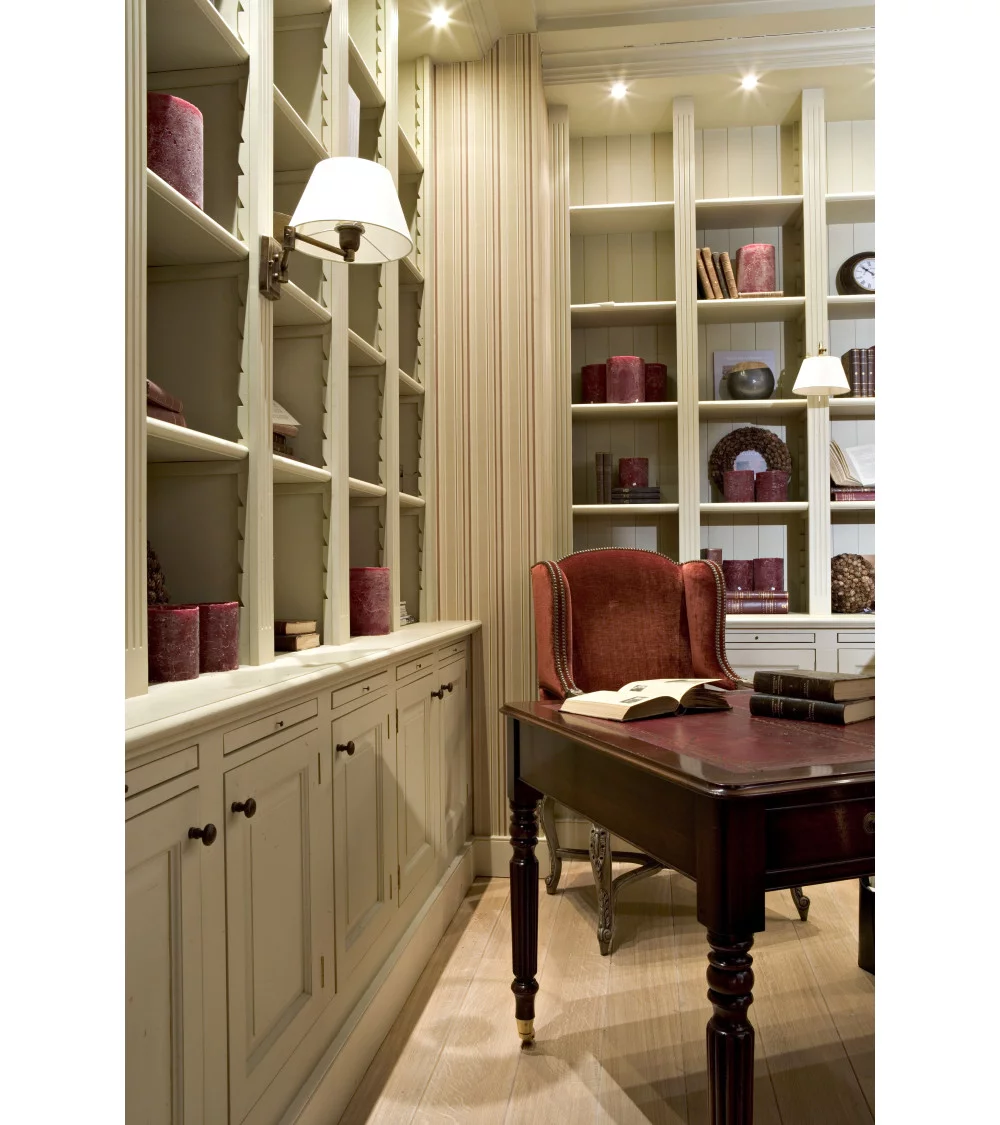
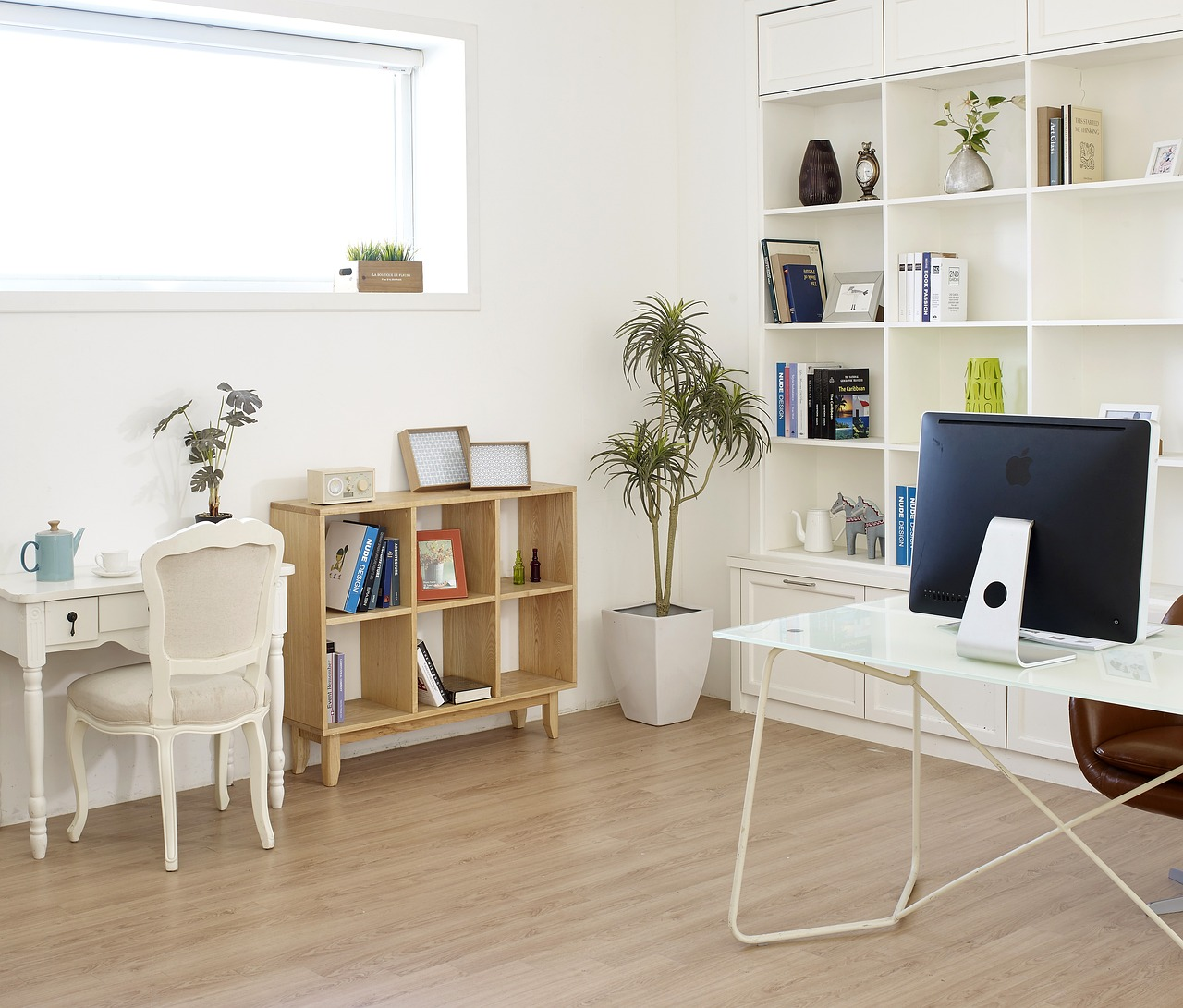
Perfect vintage atmosphere thanks to a white wooden bookcase enhanced with iron furniture knobs next to a dark wood desk!
Materials and colours
Choose materials that harmonise with the rest of your interior decor. Solid wood, metal and glass are common options. Colours should also be chosen carefully to create an environment conducive to work. As for chairs, you have a wide range of materials: plastic, fabric or leather depending on taste and budget!
The quality and durability of office furniture
Investing in quality furniture is crucial to ensure its longevity.
Quality materials: opt for durable materials such as solid wood, metal and toughened glass. Favour quality hardware such as sturdy furniture handles to ensure your furniture lasts over time.
Reputable brands: choose brands known for their reliability and the quality of their products. This ensures a good long-term investment.
Warranty and after-sales service: check the warranty conditions and availability of spare parts to avoid unpleasant surprises in the event of a problem. Check delivery and assembly conditions with the furniture manufacturer.
Office budget
Budget is a determining criterion in choosing office furniture.
Set a budget: assess how much you are prepared to invest in your office furniture. Premium furniture can represent a significant investment, but it is crucial for your comfort and productivity.
Value for money: look for furniture offering good value for money. Don't sacrifice quality for a lower price.
Financing and payment options: if your budget is limited, explore financing options or payment in instalments to spread the cost.

Optimising office space
Workspace layout is crucial to create a functional environment.
Space planning
Use layout techniques to maximise available space. For example, place the desk near natural light sources and use wall shelves to free up floor space.
The layout of office partitions has significant importance in terms of comfort and ergonomics. Proper partition configuration can reduce auditory and visual distractions, thus creating a calmer working environment conducive to concentration. Well-placed partitions can help define personal spaces, improve air and light circulation and finally, allow better arrangement of workstations.
Modular furniture
Modular and multifunctional furniture is ideal for small spaces. It allows you to easily reorganise the space according to needs.
Smart storage
Invest in smart storage solutions to keep your workspace organised and clear. A desk with integrated storage, for example, combines a work surface with storage spaces such as drawers, shelves and sometimes even compartments for computer equipment. This keeps all essentials within reach, whilst saving space and maintaining an organised and uncluttered working environment.
Choosing the right office furniture is a task that requires thought and planning. By identifying your needs, prioritising ergonomics, choosing quality furniture and optimising available space, you can create a working environment that promotes productivity and wellbeing. Don't forget to incorporate design elements to personalise your space and make it even more pleasant. Visit our website to discover a selection of designer furniture handles that will add a unique touch to your office furniture.
By following this advice, you will be able to choose the ideal office furniture for your specific needs. Good luck with setting up your workspace!
Other articles that may interest you:
Properly setting up your home workspace
How to maximise storage space in the home?
Comments
No comments yet!
Leave your comment