


.jpg)
.jpg)

The handles of the Château de Fontainebleau: a journey to the heart of history
Castle handles: the hidden treasures of Fontainebleau!
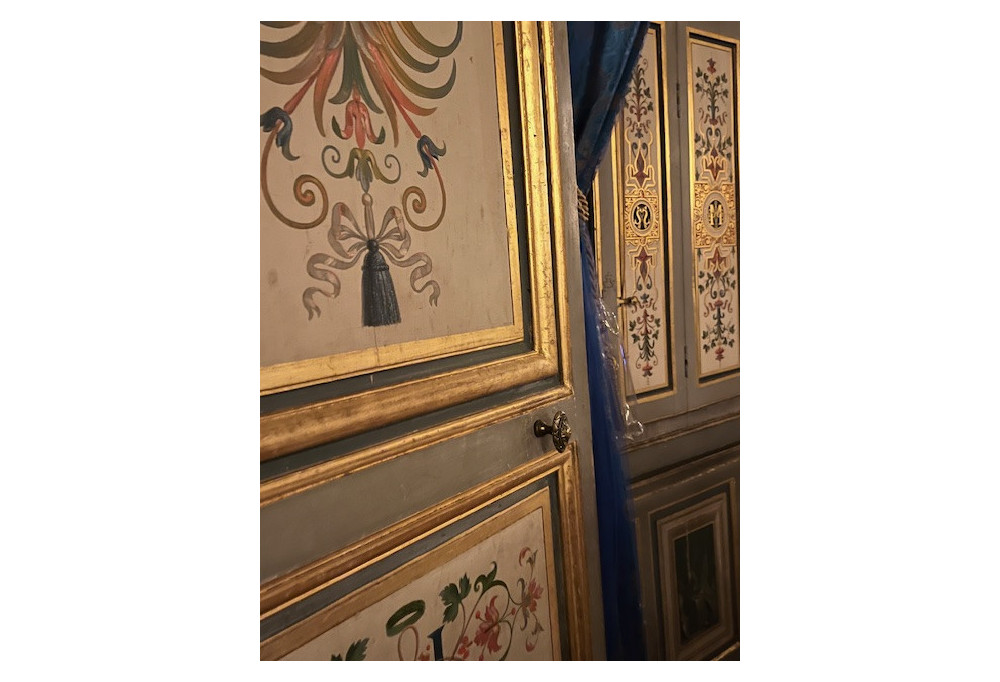
Castle handles: the hidden treasures of Fontainebleau!
When one pushes open the doors of a place as prestigious as the Château de Fontainebleau, the eye is naturally drawn to the opulence of the décor, the frescoes, the gilding… But if one takes the time to observe the details, a discreet yet fascinating element reveals itself: the door and window handles. Through these pieces of ironwork, an entire chapter of the history of design and craftsmanship unfolds before us.
A dive into the history of hardware
The Château de Fontainebleau, the favourite residence of many French sovereigns from the Middle Ages to Napoleon III, is a veritable open book on the evolution of architectural and decorative styles. Every period has left its mark, and this can be felt right down to the door handles. From the delicacy of Renaissance motifs to the classical elegance of the Empire style, these ironwork pieces trace an entire history of craftsmanship and exacting standards.

Handles of varied and refined styles
Throughout my visit, I was able to capture in photographs several handles well worth a closer look, featuring doors or windows in a variety of decorative styles:
- The Renaissance handles, finely sculpted, with their floral motifs and graceful curves, typical of the 16th century.
- The gilded handles of the Grand Apartment, with their regal stature, where every detail reflects the taste for luxury characteristic of the monarchs of the Ancien Régime.
- The Empire handles, symmetrical and imposing, characterised by their straight lines and patinated bronze ornaments.
It is precisely at Fontainebleau, in the royal apartments and the state rooms, that one discovers the full stylistic richness of antique handles: curved handles, shell handles, monumental pull handles or small crystal furniture knobs, mounted on doors of solid carved wood or adorned with gilded brass escutcheon plates.
Each piece seems to tell a story, to illustrate an era, a function, a protocol. Let the images speak for themselves!

An articulated window handle
Among the treasures observed, a bronze or brass window handle with a sophisticated mechanism particularly caught my attention. It features a patinated bronze structure adorned with openwork circular motifs and an articulated arm, reminiscent of the neo-Gothic and neo-Renaissance influences of the 19th century.
This type of handle, beyond its crafted aesthetic, perfectly illustrates the alliance between engineering and ornamentation in great historic residences.

A majestic Renaissance handle
Another remarkable piece is this richly ornate window handle. Its knob features a floral motif in relief, typical of the Renaissance, with symmetrical scrolls and a patinated bronze finish. Just above, a sculpted plate bears an expressive mask – a common decorative motif in 16th-century architecture and ironwork, used as a symbol of protection and prestige. Its closing mechanism, connected to a vertical espagnolette rod, is testament to a system as functional as it is elegant, perfectly suited to the large windows of Fontainebleau.

A window handle with spectacular ornamentation
This handle perfectly embodies the decorative exuberance characteristic of the great royal residences. Its circular knob is finely chiselled with a floral motif in relief, framed by a beaded frieze that enhances its elegance. But what strikes one most is the whole mechanism surrounding it: an imposing structure in sculpted bronze, adorned with foliage motifs and an expressive mask at the top – a decorative element typical of the Renaissance and Mannerism. This type of ironwork is not limited to its utilitarian function: it becomes a true work of art, a witness to the refinement that permeated every detail of the Château de Fontainebleau.

A Rococo handle of exquisite elegance
Among the treasures observed, this French window handle stands out for its refinement and its distinctly Rococo inspiration. Its undulating curves and finely chiselled motifs are reminiscent of the ornamental art of the 18th century, when lightness and fantasy held sway. Its tip, shaped like a stylised animal head – perhaps a dolphin or a dragon – adds a theatrical and mythological touch, common in ironwork of the Louis XV period. Made from bronze or gilded brass, it bears witness to the attention to detail and luxury that permeated royal and aristocratic interiors. A handle that, on its own, tells the story of an era when every element of the décor was conceived as a work of art.

An Empire handle with beaded decoration
A typical example of the Empire style is distinguished by its geometric rigour and understated elegance. This substantial lock, framed by beaded motifs, is enhanced by a side handle adorned with stylised vegetal motifs. This type of ironwork perfectly illustrates the influence of Antiquity on early 19th-century design, where symmetry and balance lie at the heart of the compositions.

An Empire-inspired espagnolette bolt, between symmetry and symbolism
This elegant gilded espagnolette bolt is a perfect example of the Empire style, characterised by symmetrical motifs and ornamentation inspired by Antiquity. The decorative elements, including the finely sculpted oval knob handle, display palmettes and stylised foliage, recalling the Greco-Roman influence favoured under Napoleon I.
The locking mechanism, both functional and decorative, illustrates the desire to incorporate art into the finest details of royal interiors. The gilded finish, which harmonises beautifully with the aged wooden door frame, underlines the importance attached to aesthetic coherence in the salons and apartments of the Château de Fontainebleau.
Each handle is a witness to an era, a way of life, a conception of refinement.
Exceptional craftsmanship
These door and window handles, true works of art, are the fruit of the meticulous work of craftsmen who had mastered to perfection the arts of cast iron, bronze and brass.
Engraved, chiselled, gilded or patinated, these jewels of hardware demonstrate the importance accorded over the centuries to the smallest elements of an interior décor. Even today, they inspire designers, architects and manufacturers of modern handles who perpetuate this quest for aesthetics and excellence.

A living legacy
At Milla Handles, the specialist in design door handles, we are particularly sensitive to the refinement of antique handles, such as those one can admire at the Château de Fontainebleau. Chiselled lever handles, solid brass handles, white porcelain door knobs, decorative rosettes or imposing escutcheons: every interior door handle or front door handle bears witness to exceptional craftsmanship. These furnishing treasures inspire us to create different models with varied finishes – chrome, satin nickel, brushed stainless steel, matt black, aged copper, aluminium or wrought iron – suited to our contemporary interiors.
Whether you are looking to fit an interior door, a sliding door, a cupboard, a drawer or a wooden door, every handle, window handle, furniture handle, recessed handle, bolt, latch or privacy turn we offer is given particular care, both in terms of aesthetics and functionality.
Our collection caters to all projects, from giving a piece of furniture a new look to restoring a classic interior, including French windows, hinged doors or pocket door systems, without forgetting specific needs such as DDA-compliant handles, spring-return handles or exterior handles for security doors. Like the craftsmen of the past, we pay particular attention to detail, to decorative hardware, to alloys such as zamak (zinc and aluminium), stainless steel or anodised aluminium, and to assembly and fixing techniques. For whether it is a château or a flat, opening a door with elegance should always remain a precious gesture.
Comments
No comments yet!
Leave your comment