


.jpg)
.jpg)

The mechanical secrets of quality door handles
When precision engineering shapes door handles: springs, spindles and other invisible components!
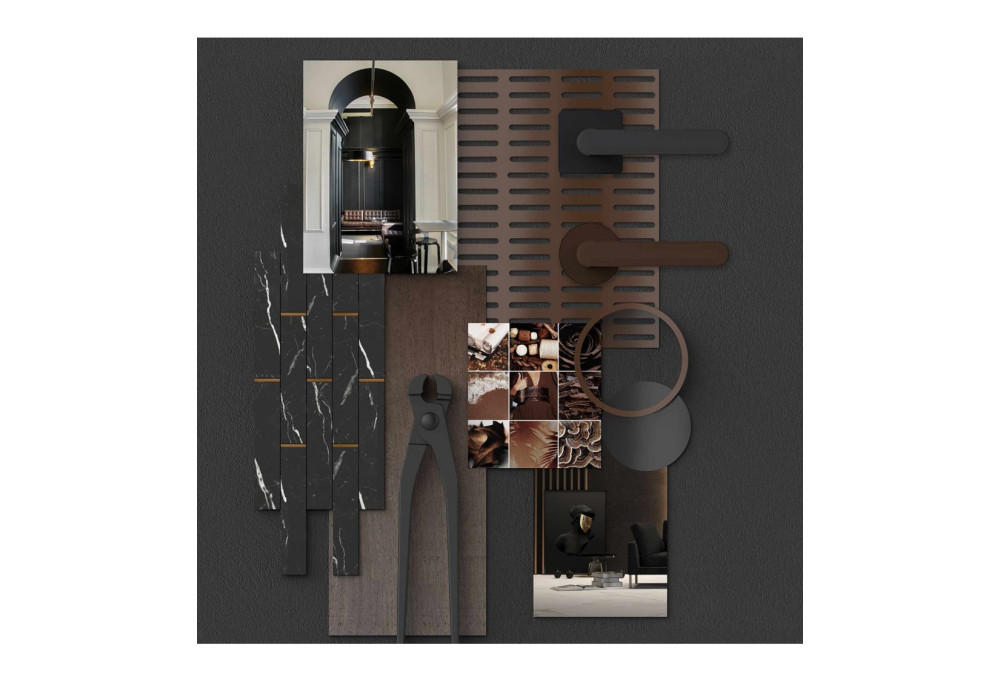
When precision engineering shapes door handles: springs, spindles and other invisible components!
Behind every door handle, this small everyday fitting, lies a precision mechanism. Springs, centre-to-centre distances, rose plates, spindles, bolts, fittings and ironmongery: all the invisible elements that guarantee smooth opening and optimal durability.
At Milla handles, every model — interior handle, exterior door handle or furniture handle — combines contemporary design and high-quality decorative hardware.
The return spring: the heart of smooth movement
The return spring is an essential component in any quality door handle, whether tubular or fitted with a double lever.
The spring allows the handle to return naturally to its initial position, ensuring precise locking and lasting comfort in use.
On both interior doors and swing doors, it prevents the mechanism from becoming loose over the years.
A door handle with a return spring offers many advantages, including quality and durability!

The square spindle and the lever: the invisible force of the mechanism
The square spindle, often made of stainless steel, connects two opposing lever handles on the same door leaf.
It transmits the rotation to the bolt and the deadbolt, ensuring a reliable locking system.
Some one-piece or solid brass models reduce mechanical play and improve the stability of door handles under heavy use.
The rose plate, the escutcheon and the screws: the combination of design and technique
Rose plates and escutcheon plates in chrome, polished brass or anodised aluminium add aesthetic appeal and ensure the secure fixing of handles while protecting the door hardware.
White lacquered, aged bronze or matt black versions pair just as well with a rustic solid wood door as with a modern glazed door.

1st Milla handles example: the handle on a long escutcheon plate with lock in a matt black finish for a sleek, elegant look on an office or classic bedroom door.

2nd Milla handles example: the door handle on a round rose plate, satin nickel finish, with its curved escutcheon, ideal for design interiors.
The locking system: precision and compatibility
Each type of handle corresponds to a specific use:
* Latch (without lock) for kitchen or living room doors;
* Key function for bedroom or office doors;
* Security lock for front entrance doors;
* Privacy lock for bathroom and WC doors;
* Espagnolette bolt for French windows and sliding bay doors.
A good fit between the handle, the mortise lock and the strike plate ensures friction-free door opening and better security against break-ins.

Another Milla handles example: the handle with a rectangular lock rose plate in anthracite grey finish is compatible with exterior doors and sliding glazed doors, combining aesthetics and robustness.

Internal materials: durable mechanics
The internal components of handles — springs, spindles, fixing screws, rings, plates — are made from resistant and durable metals.
Screws are generally made from corrosion-resistant metals — stainless steel, zinc-plated steel, brass — as they are subject to mechanical stress and are in contact with different materials (steel, aluminium, wood, etc.).
The spring is the mechanical heart of the handle's automatic return system. It is designed to withstand thousands of cycles without losing its tension. This key component is made from hardened carbon steel (C75, C100, etc.), which offers excellent elasticity and fatigue resistance, and is protected by a surface treatment (zinc plating, nickel plating, or dry lubrication) or made from stainless steel (AISI 302 or 304).
Other internal components such as the square spindle or fine screws, which ensure movement transmission and the stability of the door handle, also use zinc-plated or stainless steel, brass or technical nylon.
| COMPONENTS | Main materials | Features |
| Fixing screw | A2/A4 stainless steel, zinc-plated steel, brass | Corrosion resistance |
| Return spring | Hardened steel, stainless steel 302/304 | Elasticity, durability |
| Square spindle / axis | Zinc-plated or stainless steel | Movement transmission |
| Washers | Nylon, brass, stainless steel | Damping and stability |
These materials for internal components are chosen for their wear resistance, flexibility and compatibility with different types of handles — from a door knob in white porcelain to a pull handle in matt stainless steel or a rustic-inspired bâton de maréchal.
Installation and maintenance: the actions that extend the life of a handle
A properly fitted handle is a handle that lasts!
During installation, make sure to tighten the fixing screws correctly, insert the square spindle properly, check the latch play and adjust the door stop.
For regular maintenance: a simple damp cloth is sufficient to preserve anodised or matt nickel finishes.
Simple tools — a screwdriver or Allen key — are all you need to install your handles in no time!
The centre-to-centre distance: a millimetre-precise detail for perfect comfort
One final tip for easy installation of your new handles: respect the centre-to-centre distance!
The centre-to-centre distance, i.e. the distance between the axis of the handle and that of the lock cylinder, determines the compatibility between the door lock and the entrance door handle.
On an armoured door or a steel door, a standard centre-to-centre distance of 92 mm ensures the correct position of the latch and the half-turn bolt.
A design door handle is far more than a decorative object: it is a piece of precision engineering with a well-oiled mechanism!
At Milla handles, we select our ranges of door handles for their mechanical robustness, refined aesthetics and durable finishes — from satin nickel to polished brass, from bright chrome to matt black.
Every model embodies a perfect balance between design, functionality and quality hardware.
Comments
No comments yet!
Leave your comment