


.jpg)
.jpg)
Which door handles resist humidity?
Which door handles for damp rooms? The criteria to know.
Which door handles for damp rooms? The criteria to know.
Door handles for damp rooms (such as bathrooms, kitchens or seaside homes) must combine durability, functionality and design. Humidity can damage not only the interior or exterior door handle but also the locks, rosettes and rods that compose them.
This guide explores the available ranges, finishes and types of handles best suited to preserve your interior doors, entrance doors or sliding doors in humid environments.
Which materials resist corrosion?
The choice of material is essential to guarantee resistance to humidity and wear.
Here are the best materials to choose for your door handles:
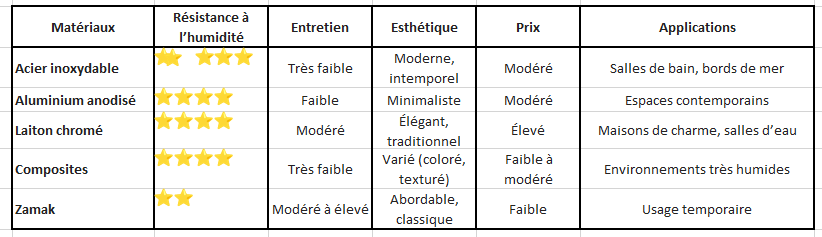
1. Stainless steel (304 or 316 stainless steel) the most humidity-resistant material is undoubtedly stainless steel, particularly 316 and 304 stainless steel alloys.
- 316 stainless steel Contains molybdenum, an element that significantly improves corrosion resistance, particularly in saline or highly humid environments (seaside, swimming pools).
Ideal for front door handles, glass doors, and other doors exposed to the elements.
- 304 stainless steel also offers excellent corrosion resistance, although slightly inferior to that of 316 stainless steel. It's perfectly suitable for interior door handles, rosettes, and systems with return spring.
Why is stainless steel so high-performing?
. Exceptional rust resistance: It forms a protective layer of chromium oxide on the surface, preventing moisture from penetrating.
. Easy maintenance: Simply clean it with a damp cloth or non-abrasive product to maintain its polished or brushed appearance.
. Versatility: Available in several finishes (polished, brushed stainless steel, or satin), it adapts to all interior and exterior decoration styles.
. Applications: Tubular handles, door knobs, or models with square rosettes. Suitable for landing doors, swing doors, or wooden doors exposed to damp conditions.
. Maintenance: Easy to clean with a soft cloth or light pressure washer.
2. Anodised aluminium
Advantages: Lightweight, durable, and available in various finishes, such as matt black or white lacquer.
Applications: Ideal for sliding doors, glass doors, or designer doors.
3. Polished or chrome-plated brass
Advantages: Elegant aesthetics for rustic doors or modern doors. Perfect for classic or contemporary interior decoration.
Disadvantages: May require specific maintenance, particularly to preserve its patina.
4. Composites (nylon, resin)
Advantages: Ideal for spare parts or furniture handles in very humid environments. Available in several colours and decorative finishes.
Applications: Cupboard handles, drawers, and wooden sliding doors.
5. Zamak
Advantages: This zinc and aluminium alloy resists humidity very well whilst being environmentally friendly as it's 100% recyclable.
Applications: bathroom and WC handles, kitchen handles - Wide range of finishes and styles.

Summary table of materials most resistant to humidity
Which types of handles to choose?
Handles for interior doors and entrance doors
. Handles with rosette or plate
Protect against water infiltration around fixings and are suitable for interior doors as well as landing doors.
Available in modern finishes such as matt black, satin, or brushed.
Compatible with interior doors and often equipped with a return spring for smooth closing.
. Door knobs
Suitable for wardrobes, cupboards, or small interior doors.
Available in crystal, brushed stainless steel, or aged bronze.
Handles for sliding and swing doors
. Recessed handles: Perfect for sliding doors in pocket door systems.
. Tubular handles: Ideal for French windows thanks to their sleek design.
Handles with key function or privacy lock
Incorporating a locking system coupled with a return spring, they're particularly suitable for fire doors and door sets for enhanced security.
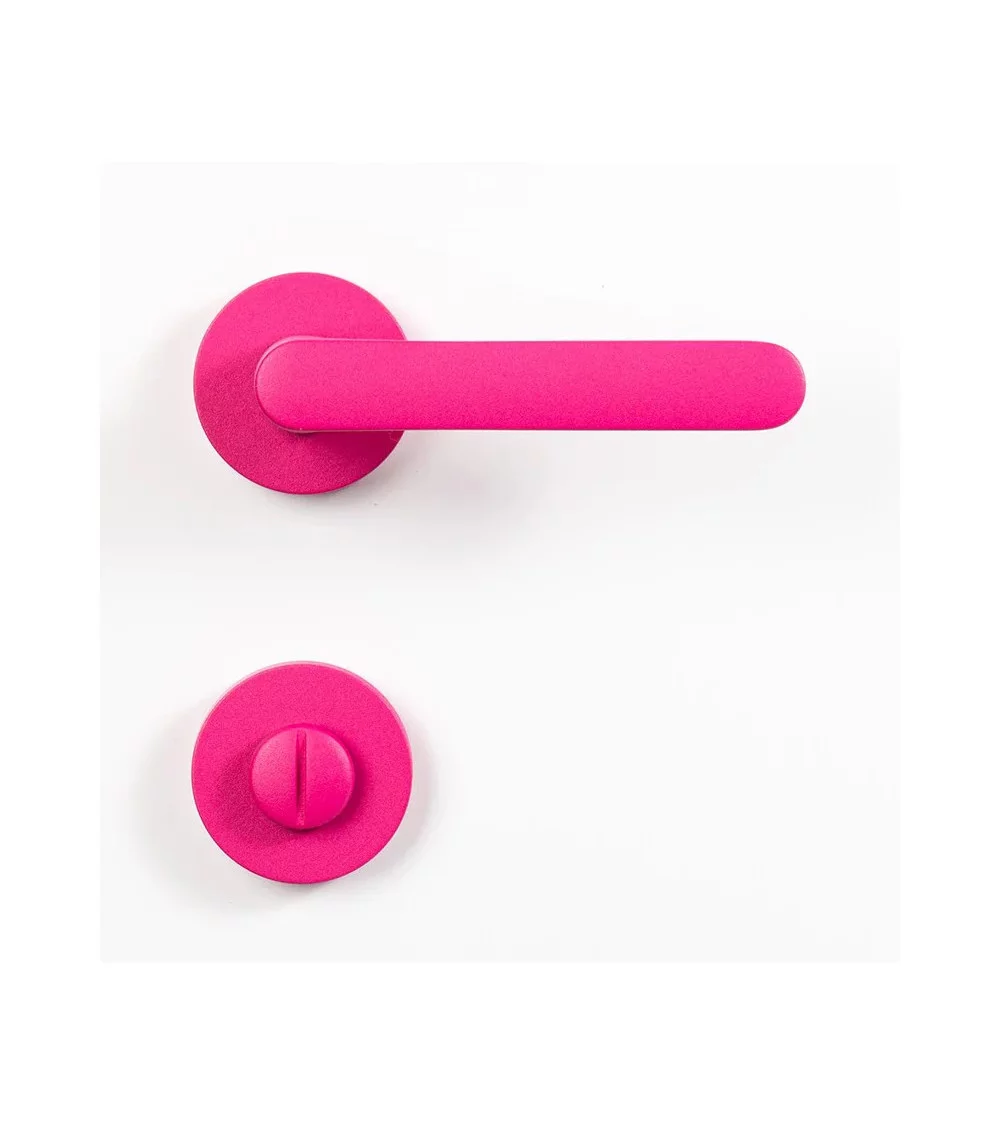
Which finish for optimum durability?
The finish of a door handle is essential for its resistance to humidity because it acts as a protective layer that extends its durability whilst preserving its aesthetics. Here's why it's important:
1. Protection against corrosion
Well-chosen finishes, such as chrome, matt nickel or satin, form a barrier between the handle material and ambient humidity. This prevents the appearance of rust or stains on sensitive materials such as brass or zamak.
A polished brass handle with chrome finish, for example, will be far more resistant in a bathroom than raw brass.
2. Improved durability
A handle with epoxy or anodised finish (as with aluminium) is particularly durable because these treatments reinforce resistance to corrosive agents such as steam or splashes.
High-quality finishes, such as those applied to brushed or satin stainless steel, reduce maintenance requirements and protect against wear.
3. Preserved aesthetics
Polished finishes (such as gold, white or black lacquer) add a modern touch but must be treated to resist water or soap marks.
An aged patina or matt finish, on the other hand, conceals fingerprints and minor imperfections caused by humidity.
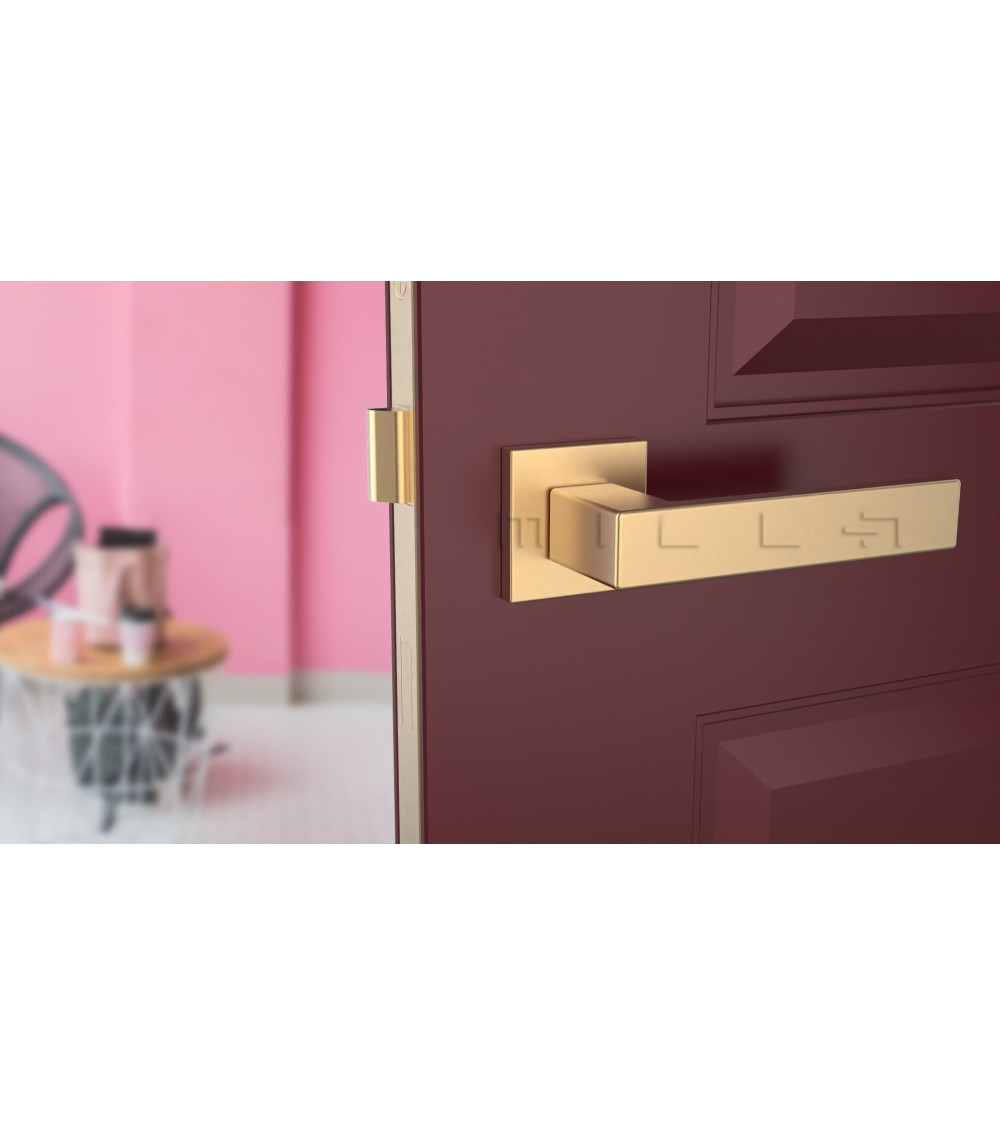
4. Ease of maintenance
Smooth finishes, such as satin or brushed, make it easier to clean handles in damp rooms such as bathroom handles.
Porous or rough finishes (e.g. rustic bronze) can accumulate water or limescale deposits, requiring more rigorous maintenance.
A matter of taste...
Of course, we mustn't exclude favourite finishes such as:
. Matt black: Very trendy in designer interiors, particularly for furniture handles or glass doors.
. Satin or brushed: Perfectly suited to front door handles and locks thanks to their resistance to fingerprints.
. Black or white lacquered: Modern and elegant, ideal for designer doors or cupboards.
Essential accessories for damp rooms
You can complete your equipment with practical and resistant ironmongery accessories:
. Door stops and hinges to preserve your openings.
. Fittings and spare parts such as rosettes, rods, or strike plates to extend durability.
Installation and maintenance advice
Appropriate installation
Ensure correct alignment of centres for robust fixing.
Use appropriate tools such as a drill, saw, and screwdriver for precise fitting.
Regular maintenance
Clean your interior and exterior handles with a damp cloth and a non-abrasive product.
Check the proper functioning of cylinders, latches and locking systems to avoid any blockage.
Choosing a handle suited to the door type
Whether it's an exterior door handle, a window handle or a drawer knob, investing in quality materials and ranges ensures the longevity of your openings. Well-chosen entrance door and interior door handles also add a touch of elegance to your interior decoration.
By visiting our showroom or consulting our carpentry and furnishing experts, you'll discover sets suited to your needs, whether it's a rustic door, a sliding door, or even a PMR handle.
This practical guide lists the criteria to know for choosing the perfect handle in humid environments. For resistant and designer models, explore our wide range of decorative and functional door handles! Decorative ironmongery offers numerous models: handle type, finish, materials, take advantage of the vast choice in our shop!
Other articles on the same theme:
Comments
No comments yet!
Leave your comment