


.jpg)
.jpg)

Which handle for an armoured door?
Practical guide to choosing your armoured door handle
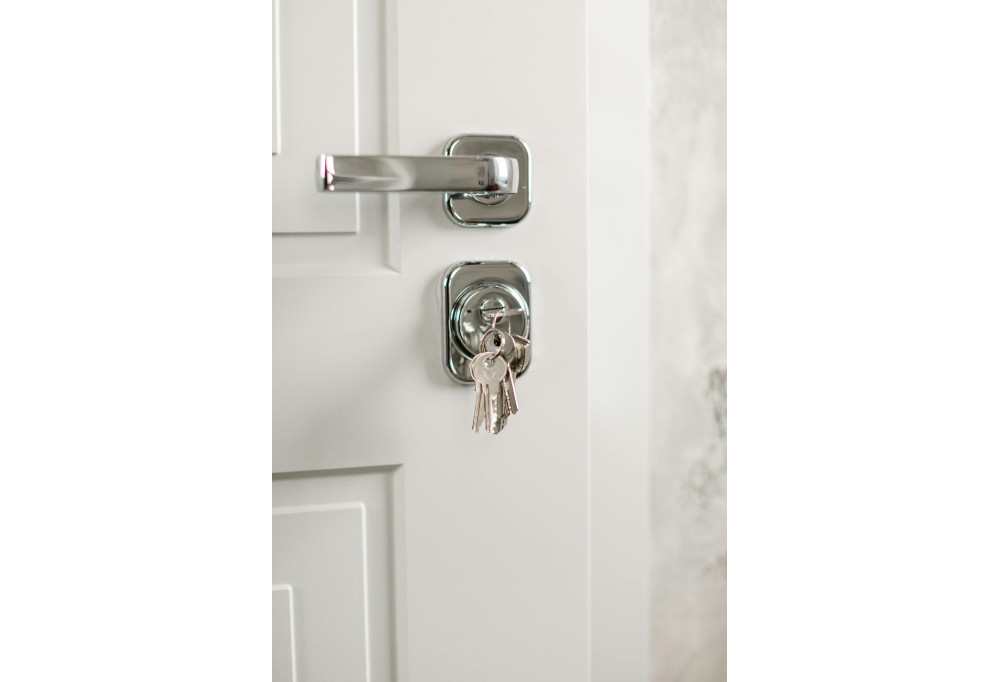
Practical guide to choosing your armoured door handle
The door handle is often perceived as a simple practical fitting or an aesthetic detail. Yet when it comes to an armoured door, it becomes an essential security element. It must not only resist break-in attempts but also be compatible with a complex locking system.
Discover how to choose the right handle for your armoured door, combining protection, ergonomics and style!
Why a specific handle for an armoured door?
An armoured door is designed to resist intrusions thanks to a reinforced metal structure, a multipoint lock, a security cylinder and a reinforced strike plate.
To guarantee the effectiveness of this assembly, the handle must be:
. Robust (resistant materials: stainless steel, solid brass, zamak…),
. Compatible with the security lock (mortise, rim-mounted, cased, hook bolt, espagnolette…),
. Suited to the type of cylinder used (European profile, round, oval…),
. Capable of protecting the cylinder against drilling, picking, pulling, or crowbar attack.
The different types of handles for an armoured door
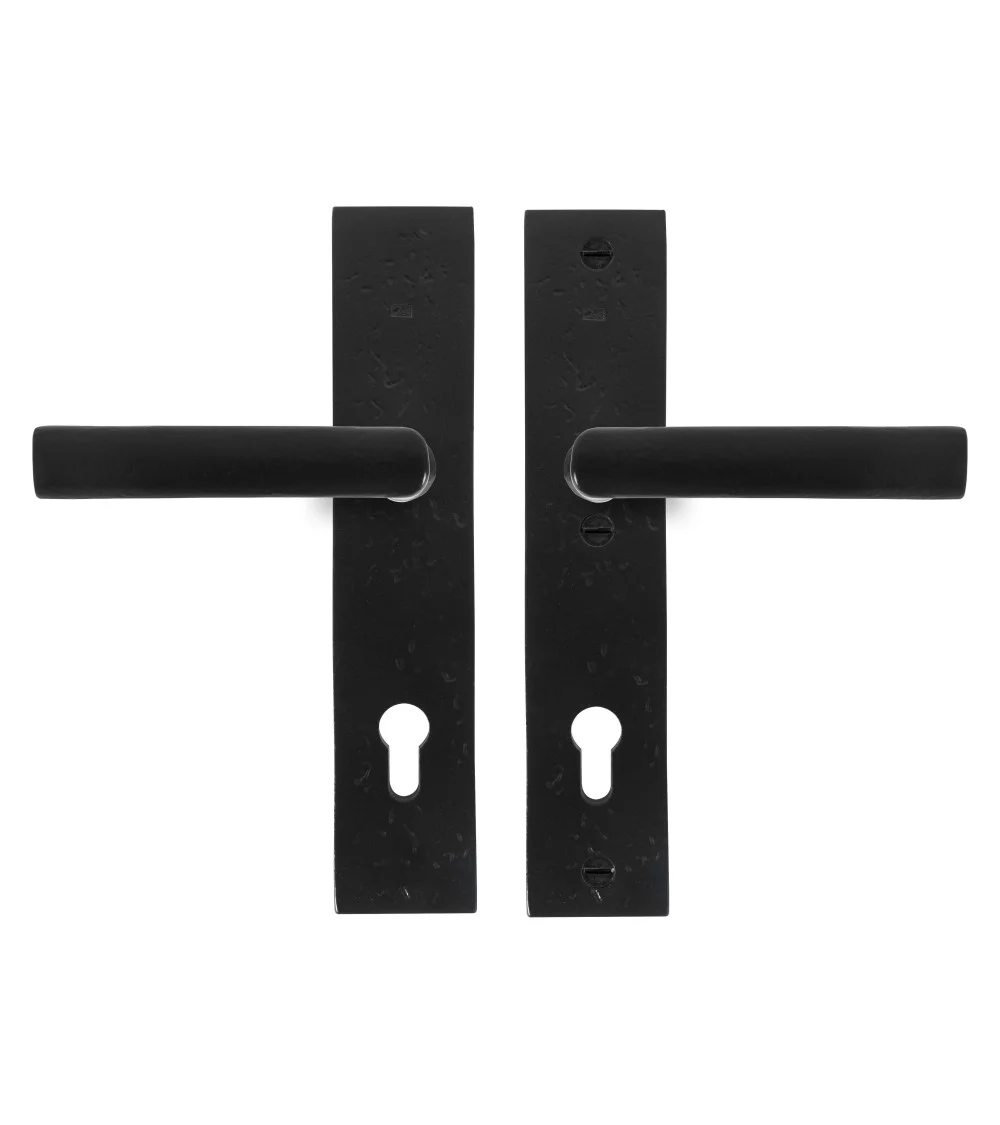
. Handle on plate
Plate handles are very common on armoured entrance doors. They cover a large surface area around the lock, offering reinforced protection of the lock cylinder. They often feature a standard centre distance (70 mm, 92 mm…) suited to multipoint locks.
✔️ Ideal for:
* Conceal the lock faceplate,
* Incorporate a rotating armoured shield,
* Resist the pulling out of the barrel.
Grade 3, within the framework of standard EN 1906, corresponds to a high level of resistance and durability
This Grade 3 handle according to EN 1906 is a reliable choice for entrance doors, including armoured doors, in environments subject to intensive use. It guarantees lasting robustness, resistance to wear, and often good resistance to acts of vandalism.

. Handle on rose with cylinder cover
For a more designer and refined look, the handle on rose is often chosen. When combined with an armoured cylinder cover, it guarantees optimum security.
✔️ Advantages:
* Modern aesthetic,
* Compatible with declutchable cylinders or key-card cylinders,
* Allows the installation of side bolts or an anti-panic system.
. Handle with integrated cylinder protection
Some models incorporate a security device preventing direct access to the cylinder: rotating disc, hardened steel, anti-drilling system. These handles are strongly recommended for cellar doors, garage doors, or landing doors.
Handle and locking system: an inseparable duo
For a security door, the handle must absolutely be compatible with the existing locking system.
✔️ Multipoint lock
Present on the majority of armoured doors,
From 3 to 7 anchor points
Operated by the handle or the locking cylinder
✔️ Other possible locks:
Cased lock (with steel box),
Rim lock (for renovation)
Mortise lock,
Electronic or connected lock (with motorised cylinder, badge, or digital code).
Major brands such as Fichet, Picard, Vachette, Héraclès, Muel or Bricard offer A2P-certified locks, paired with compatible armoured handles.
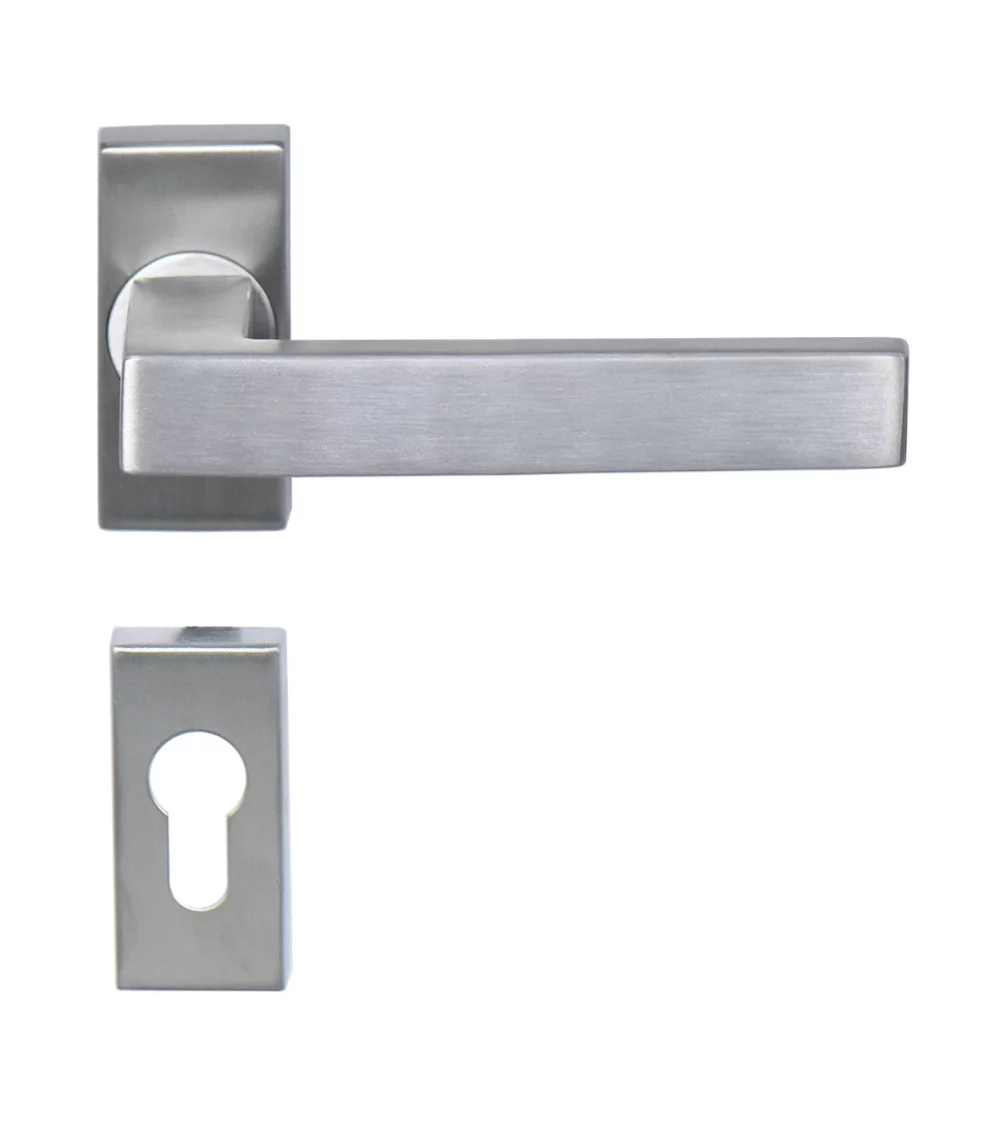
Enhanced security: focus on key components
✔️ Security cylinder
Resistant to picking and drilling,
Can be declutchable (allowing opening from the outside even when a key is inserted on the inside),
Often accompanied by a key card for key duplication.
✔️ Security shield
Element fixed beneath the handle,
Protects the barrel against mechanical attacks,
Often made of hardened steel.
✔️ Reinforced faceplate and anti-burglary strike plate
Metal parts fixed in the door frame,
Enable a hermetic and robust closure,
Recommended in shared buildings, commercial premises, or individual houses.
5. What style of handle for an armoured door?
Choosing a handle for an armoured door doesn't mean giving up on design! Today, many models combine contemporary aesthetics with secure materials:
. Handle finishes: brushed chrome, matt black, aged brass, antique bronze, satin nickel…
. Varied styles: minimalist, classic, industrial, high security.
. Possible combinations: handle + armoured rose, lever + cylinder cover, pull handle with recessed lock…
Coordinate your armoured door handle with your other interior handles, for a consistent look throughout the home.
Mistakes to avoid
❌ Choosing a handle not suited to the door thickness (often 50 mm or more),
❌ Overlooking compatibility with the lock centre distance,
❌ Opting for a purely decorative model, without cylinder protection,
Our handle models for securing your exterior door
Find on our Milla Handles shop a selection of secure handles combining maximum security, elegant design and compatibility with multipoint locks and European cylinders.
Need personalised advice? Our team will guide you in finding the handle perfectly suited to your armoured door, whether for a primary residence, a commercial premises, or a flat in a shared building.
The door handle is far more than a simple accessory. On an armoured door, it becomes a true barrier against break-ins. Between armoured shields, certified locks, plate handles or rose handles, the choice is wide but must always be made with the greatest care.
Security, durability, ergonomics and aesthetics: these are the key words for choosing your armoured door handle wisely. Discover our collection of exterior door handles.
FAQ
Can I fit a standard handle on an armoured door?
It is strongly inadvisable to fit a standard handle on an armoured door. Standard handles are not designed to resist break-in attempts and are often not compatible with multipoint locks or high-security cylinders. To guarantee the performance of your locking system, opt for an armoured handle specifically designed for secure entrance doors, with cylinder protection and reinforced materials.
How do I maintain an armoured door handle?
Maintaining an armoured door handle is simple but essential to ensure its durability. Regularly clean the surface with a soft cloth and a non-abrasive product suited to the finish (stainless steel, chrome, brass, matt black…). Avoid corrosive products that could damage the cylinder protection or the anti-burglary coating. Also periodically check that the mechanism is functioning correctly and tighten the fixings if necessary.
Comments
No comments yet!
Leave your comment