


.jpg)
.jpg)

Knob or furniture handle: how to choose?
Knob or furniture handle: the best option
Knob or furniture handle: the best option
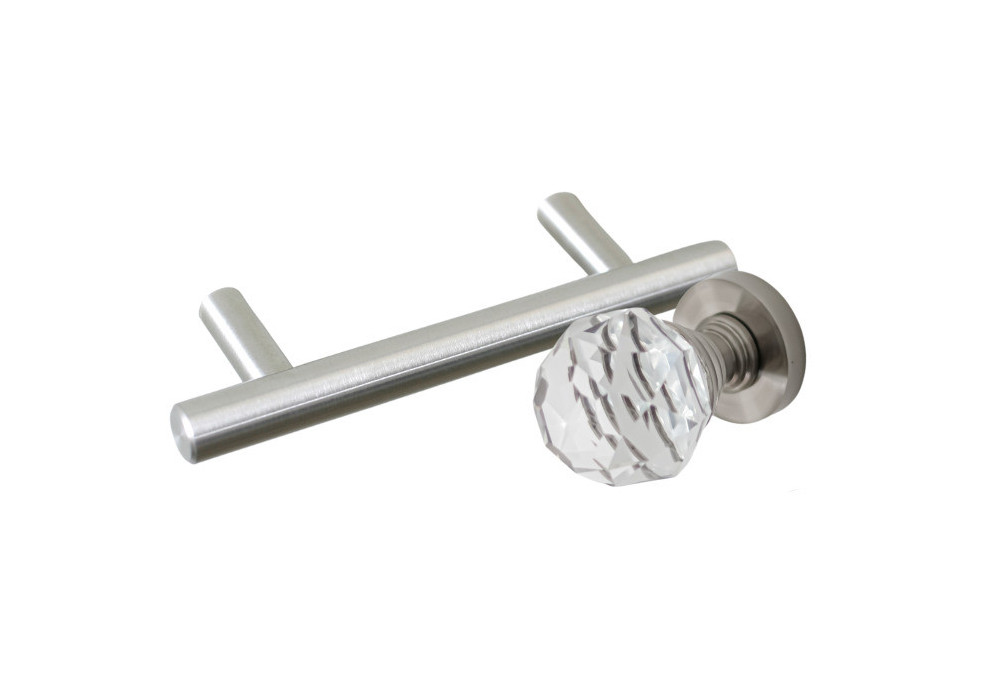
Knobs and handles are essential elements for adorning furniture. These elements directly influence the aesthetics and user-friendliness of your space. Whether in the kitchen, living room, or bedroom, furniture hardware plays a fundamental role in defining the style and functionality of your furniture. But how do you choose between a knob or furniture handle?
Understanding needs and style
Beyond the decorative aspect, choosing between a knob and a furniture handle proves to be a crucial step. These elements allow meticulous personalisation of your furniture to create a model that is uniquely yours.
Functional needs: ease of opening, security, etc.
Knobs and handles for furniture impact the functionality of your furnishings. To begin with, consider the ease of opening doors and drawers. Knobs, discreet and often compact, are perfect for subtle opening. Their format is particularly suited to furniture in restricted spaces. On the other hand, handles provide a more ergonomic grip. They are particularly appreciated in kitchens and dressing rooms where quick access is essential.
Safety is also a crucial element. If you have young children, knobs can be a safer option as they reduce the risk of pinching. Handles, on the other hand, can be fitted with locking mechanisms, adding an extra layer of protection.
Style: original, vintage, industrial
Beauty lies in the details. If your taste leans towards originality, opt for knobs with unique shapes and designs. They bring a touch of eccentricity to your furniture.
If you prefer the timeless charm of vintage, handles are often the perfect companions. Choose designs inspired by bygone eras to give your interior a retro and elegant atmosphere. Combinations of metal and wood reflect an authenticity that stands the test of time.
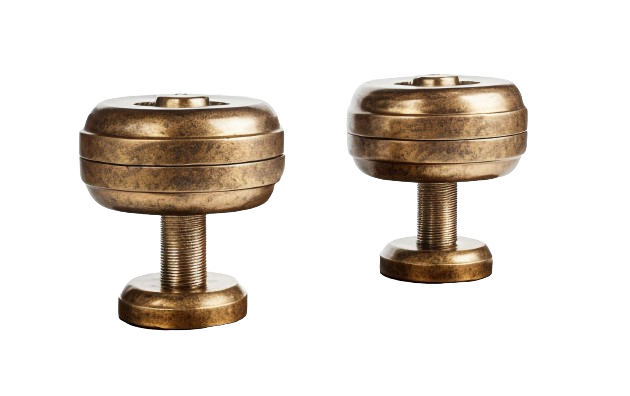
If a modern industrial aesthetic is your goal, handles with clean lines and robust materials complement this contemporary style perfectly. Consider stainless steel or brass finishes for a chic industrial look.
Functionality and ergonomics
Furniture knobs and handles shape how you use your furniture. Each choice, whether an elegant knob or an ergonomic handle, has an impact on the ease of use and overall functionality of your interior spaces.
Advantages and disadvantages of knobs
Furniture knobs embody simplicity in its purest form. Their small size makes them discreet. They allow intuitive opening, which is ideal for light cupboards or delicate drawers. However, their size can sometimes be problematic for those with larger hands, making them less practical for more imposing furniture. The advantage lies in their ability to add style without dominating the room.
Advantages and disadvantages of handles
Furniture handles present themselves as bold models. Their generous size makes them more accessible, facilitating the opening of bulky drawers. Their presence also offers a major aesthetic opportunity, allowing experimentation with unique designs. Nevertheless, their size can be cumbersome in more restricted spaces, and their installation often requires more effort.
Specific use cases for each option
Let us look at specific cases. Knobs enhance bedroom chests of drawers by creating exquisite details. In the case of an antique chest of drawers, each knob is a delicate little gem. In living rooms, knobs on furniture create an atmosphere of discreet refinement, whilst for contemporary kitchens, stainless steel knobs offer a refined aesthetic and create a modern ambiance.
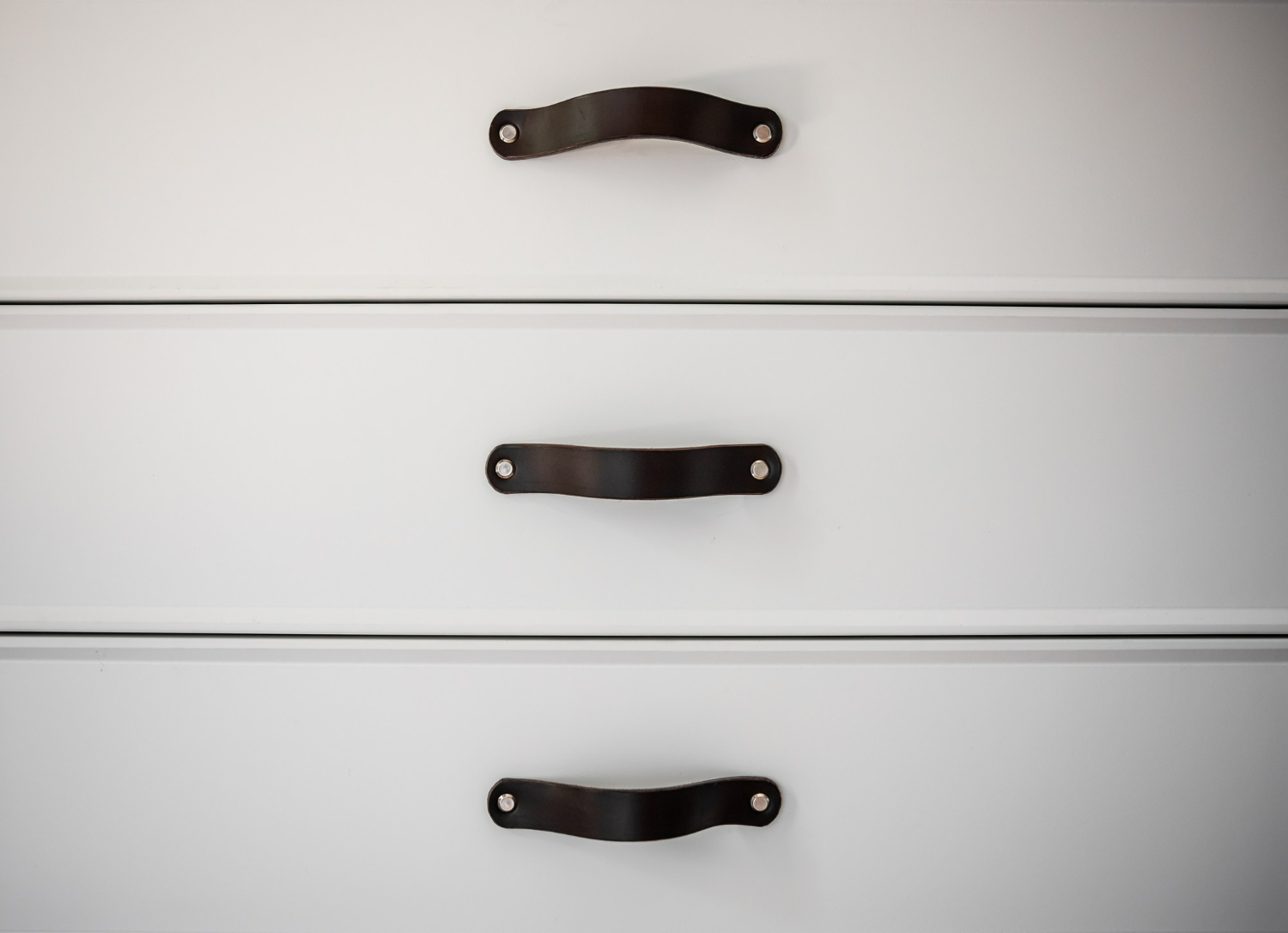
Handles are more practical for kitchen cupboards. Recessed linear handles add refined elegance. Conversely, for a rustic style, leather handles on wooden furniture provide a warm atmosphere, whilst stainless steel handles with clean lines can create a modern and industrial atmosphere. Handles express the style you wish to establish in your space. Harmonising these details with existing furniture is an art in itself. The most essential thing is to maintain visual consistency.
Practical tips for choosing between knob and furniture handle
Here are some additional tips to guide you towards the ideal hardware according to your specific needs and the style you wish to achieve:
- Decorating style: ensure that the choice between knob and handle harmonises with the overall style of your space, whether modern, classic, rustic, or other.
- Frequency of use: If the furniture is frequently used, favour handles that allow easy grip; discreet knobs may suffice for drawers or doors that are rarely used.
- Size and proportions: Choose the size of knobs or handles according to the dimensions of the furniture to maintain visual balance.
- Materials and environment: choose materials suited to the environment, for example, moisture-resistant materials for the kitchen or bathroom.
- Creativity and personalisation: if you are seeking a more personalised aesthetic, explore creative options such as ceramic knobs with patterns.
- Comfort and practicality: think about the daily use of the furniture. Handles can be more practical in the kitchen. They ensure an ergonomic grip.
- Easy maintenance: consider ease of care. Some materials require specific cleaning, whilst others are more stain-resistant.
The choice between knob and furniture handle reflects your design sense and personal preferences. By following the advice set out in this article, you will be better equipped to make informed decisions and create an interior arrangement that is functional, aesthetic and true to your image. Whether you opt for the subtlety of a knob or the assertive grip of a handle, the harmony between form and function will define the timeless beauty of your spaces.
Comments
No comments yet!
Leave your comment