


.jpg)
.jpg)

Smart door handles: the evolution of the handle in the era of connected buildings
Door handle 3.0, the key interface for smart buildings!
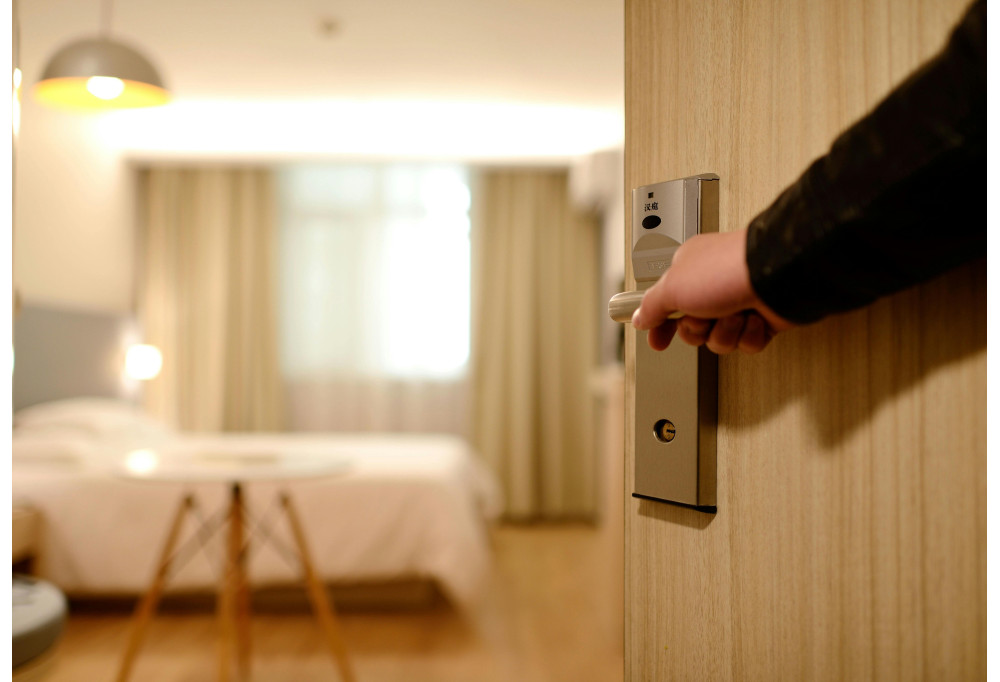
Door handle 3.0, the key interface for smart buildings!
A major transformation of the door handle: from mechanical object to digital interface...
In smart buildings — smart homes, connected hotels, automated offices, intelligent homes — the door handle is no longer a simple mechanical component. It becomes a true digital peripheral, capable of communicating with a centralised home automation system, interacting with connected devices, alarms, roller shutters, sensors, and even a complete alarm system.
As home automation solutions become widespread (Z-Wave, Zigbee, EnOcean, KNX, Delta Dore, Somfy, Jeedom, eedomus, Domoticz…), the door handle is evolving towards an unprecedented role:
* control and manage access, * improve the level of security, * automate opening and closing, * and even save energy in conjunction with smart lighting or electrical consumption management.
How a smart door handle works
A smart handle works like a connected lock: access is based on a digital identifier (smartphone, RFID badge, biometric reader…).
If this identifier is recognised, the handle activates its bolt, barrel, cylinder, or multipoint locking device depending on the type of lock.
In the event of a lost badge or smartphone, there is no need to change the lock: simply deactivate the identifier in the system. A new digital key is generated instantly, with no locksmith fees or cylinder replacement.
Here are the three main operating modes of a connected handle:
Opening via smartphone
Extremely common in smart homes, it relies on a mobile app connected to the handle via Bluetooth, WiFi, or a secure protocol.
The user: * opens the app * activates their virtual key * and the handle unlocks via its electronic mechanism.
This method enables: * remote door opening * sending temporary badges (Airbnb) * automation (opening the door when approaching with your smartphone) * notifications in the event of intrusion or break-in
Opening via RFID badge or electromagnetic key
The user presents their badge, card, or electronic key fob to the reader integrated into the handle.
An RFID badge allows you to open a door without a key using radio waves.
Widely used in hotels, offices, armoured doors, or sensitive areas, this system offers:
* no WiFi required * affordable badges * simple management (block a badge, programme a new one, control access room by room)
Biometric opening: fingerprint, face, iris
The most advanced handles use a biometric reader:
* fingerprint * facial recognition * or iris recognition
The reader compares the fingerprint against its secure database. This is the most secure technology (anti-break-in, anti-picking, anti-panic).
Technologies integrated into modern smart handles
Smart handles include:
➡️ RFID / NFC * RFID: radio reading (hotels, secure buildings) * NFC: short-range communication (smartphone, contactless badges)
➡️ Bluetooth / BLE Allows contactless opening with the smartphone.
➡️ WiFi For managing access remotely, receiving alerts, and activating an alarm.
➡️ Biometrics Integrated fingerprint reader.
➡️ Voice assistants (Alexa, Google Home, Siri) For: * locking the door * checking whether it is closed * launching a home automation scenario (lighting, alarm, heating…)
Security benefits:
✔️ immediate deactivation in case of loss ✔️ opening history ✔️ enhanced security (A2P cylinders, anti-drilling, reinforced strike plates) ✔️ automatic locking ✔️ alarm / siren integration
And at Milla Poignées?
We do not yet sell 100% connected handles, but several of our models are compatible:
* European cylinders * multipoint systems * armoured doors * electronic locks * simple installation * electronic barrels
These door handles integrate into smart home projects, home automation setups, automated offices, or connected hotels.
Conclusion: the connected handle becomes a key element of the smart home
The door handle is no longer just a piece of equipment:
➡️ it becomes a home automation interface ➡️ a central security element ➡️ an automation tool ➡️ a lever for energy savings ➡️ a player in access management
Soon, smart handles will be even more integrated with voice assistants, home automation systems, communication protocols, and access control.
Comments
No comments yet!
Leave your comment