


.jpg)
.jpg)

Professional door handles: how to meet the requirements of public buildings and hotels?
Door handles for public buildings and hotels: selection criteria, standards and comparison with residential handles
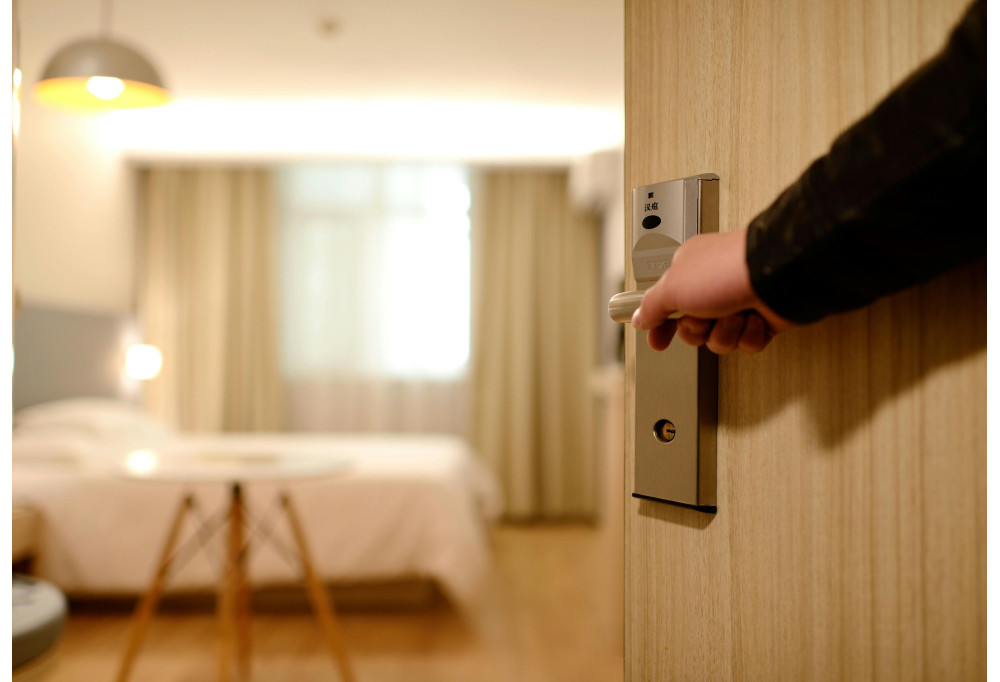
Door handles for public buildings and hotels: selection criteria, standards and comparison with residential handles
Door handles designed for public buildings and hotels are not merely functional elements. They must meet precise requirements in terms of safety, accessibility, durability and aesthetics. Discover in this article how to choose handles suited to these demanding environments while complying with current standards.
Essential standards for handles in public buildings and hotels
Accessibility for all: PMR standards
Interior and exterior door handles must be accessible to wheelchair users and comply with specific installation criteria:
* Installation height between 90 cm and 1.30 m on entrance or interior doors.
* Lever handles, latch handles or tubular handles for easy operation, even on a sliding or swinging door.
* Reduced bulk to allow door opening with optimal clearance.
For more information, consult our article on PMR handles.
Fire safety and resistance
Public buildings such as schools, hospitals or ERP (Établissements Recevant du Public – buildings open to the public) require handles compliant with the NF EN 1634 standard for fire-rated doors.
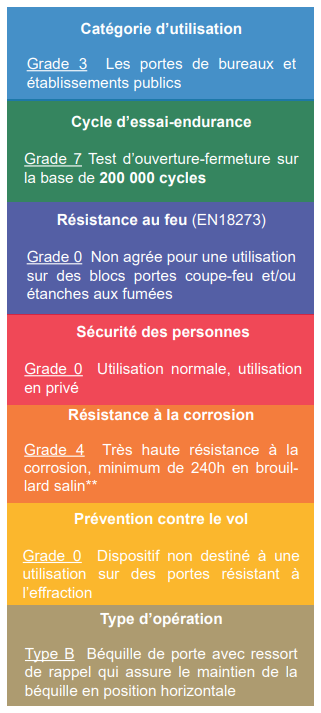
The NF EN 1634 standard, and more specifically its grade 3, is a European standard that assesses the performance of doors and associated elements (including handles and fittings) in terms of fire resistance and smoke control. Here is what this means in more detail:
1. Objective of the NF EN 1634 standard
The NF EN 1634 standard is divided into three main parts:
NF EN 1634-1: Fire door and fire-resistant door.
NF EN 1634-2: Smoke control for industrial and commercial closures.
NF EN 1634-3: Air permeability and smoke tightness of doors.
2. Decoding grade 3
In the context of public buildings, hospitals or hotels, grade 3 guarantees that the equipment (handles, fittings, hinges, etc.) associated with a door meets strict criteria:
* Fire resistance
Elements must remain functional for a minimum period (often 60, 90, or even 120 minutes), even under high temperatures. This includes the handle, the lock, and the metal components.
* Smoke tightness
Handles and fittings must prevent the spread of toxic smoke, which is essential to allow a safe evacuation in the event of a fire.
* Intensive use
Grade 3 also corresponds to high and durable use in environments where doors are used several times a day. This ensures that handles and fittings have a solidity suited to fire-rated doors in establishments open to the public (ERP).
Requirements for handles under NF EN 1634 Grade 3 standard
* Fire-resistant materials
Handles must be made of stainless steel, zamak or solid brass, capable of withstanding intense heat without deforming or giving way.
* Compatibility with fire-rated systems
Handles must be paired with fire-rated certified locks and strike plates.
* Durability
Handles must be tested to withstand at least 200,000 opening and closing cycles, guaranteeing their long-term reliability.
* Functional design
Handles must be ergonomic to allow easy opening, even in the event of panic or rapid evacuation.
* Reinforced locks and fittings to prevent break-in risks, particularly on landing doors or armoured doors.
* Locks and latches with anti-panic system to facilitate door opening in an emergency.
Grade 3 of the NF EN 1634 standard is a mark of quality and safety for door handles intended for high-risk environments, such as public buildings, hotels and hospitals. If you are looking to fit your doors with handles compliant with this standard, it is crucial to verify that the entire system (handle, lock, fitting) has been tested and certified to this requirement.
Standards table
Hygiene and cleanliness in sensitive spaces
Handles for hospitals, schools or professional kitchens must be designed with hygienic materials:
* Antimicrobial alloys, such as copper-zinc or brushed stainless steel, actively reducing bacterial proliferation.
* Lacquered or satin finishes resistant to disinfectant products.
* Escutcheons or finger plates for an aesthetic and hygienic finish.
Materials and finishes suited to professional handles
Stainless steel (304 or 316L)
* Resistant to corrosion and chemical agents.
* Suitable for high-traffic areas and damp environments.
* Ideal for entrance or interior doors in damp environments.
Solid brass (or polished brass)
* Premium material for hotels and designer spaces. Can be treated for corrosion resistance with nickel or chrome finishes.
* Available with aged, patinated or chrome finishes.
Zamak
* Zinc and aluminium alloy, 100% recyclable, this material is robust and economical for interior handles in offices or schools.
Antimicrobial alloys (copper and its derivatives):
* Copper-nickel (Monel): Very effective against bacteria and viruses.
* Copper-zinc (antimicrobial brass): Particularly suited for handles in hospitals and schools.
* Proven reduction of 99.9% of micro-organisms within 2 hours (EPA standard).
Anodised aluminium
* Lightweight, economical and customisable in terms of colour.
* Recommended for areas with moderate use (offices, schools).
White porcelain
* Elegant, timeless and naturally hygienic, porcelain is often used on rustic or classic interior door handles.
Decorative finishes
Door hardware now offers a wide range of finishes for professional handles: chrome, matt black, matt nickel, gold or lacquered white allow adaptation to different styles and the creation of designer spaces.

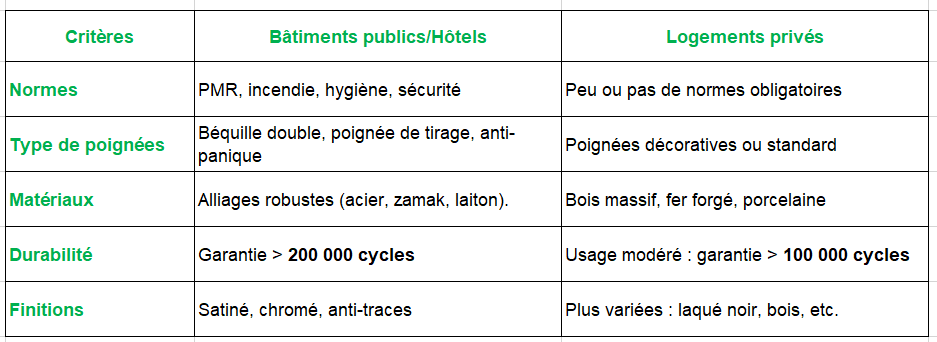
Comparison: handles for public buildings and private residences
Advice on choosing according to building type
* Hotels
High-end design with integration of electronic systems (magnetic cards, NFC).
Handles with privacy lock or electronic lock.
Elegant materials such as polished brass or lacquered finishes.
* Hospitals and clinics
Antimicrobial coatings certified to ISO 22196.
Stainless steel or antimicrobial alloy handles to guarantee impeccable hygiene.
Discreet and robust escutcheons for fire-rated doors.
Contactless handles or handles operated by the forearm.
* Schools and universities
Handles resistant to impacts and intensive use (aluminium or zamak).
Satin finishes for easy maintenance.
Customisable colours for better identification (evacuation doors, specific rooms).
* Shops and offices
Ergonomic handles in satin stainless steel or matt black.
Adapted locking systems, such as tubular locks or reversible lever latches.
Contemporary design, often combining stainless steel with glass.
Ergonomics designed for high customer footfall.
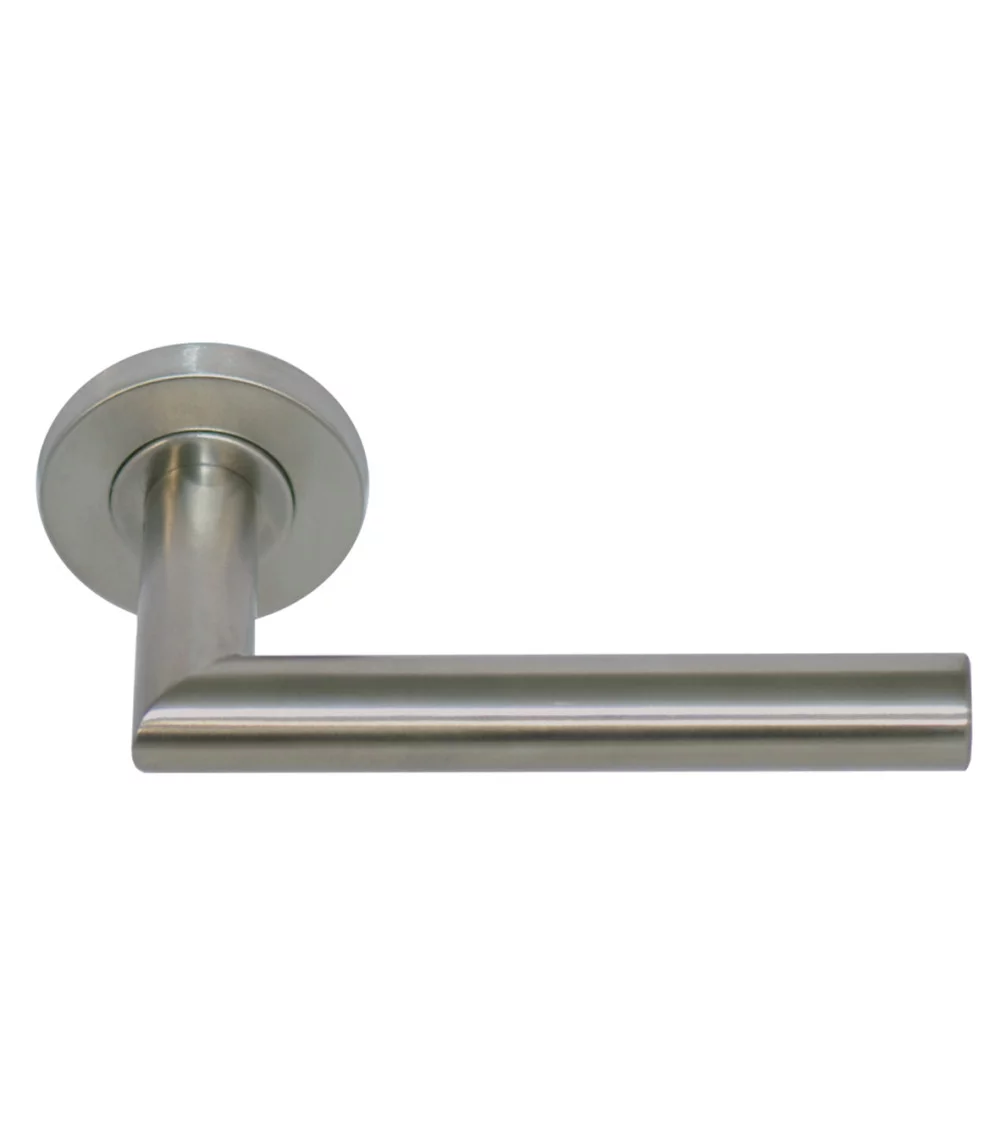
Additional criteria for a high-performing handle
* Centre distance: Standard or custom-made depending on glazed, wooden or armoured doors.
* Compatible locks: Tubular locks, reversible latches or cylinder systems.
* Complementary accessories: Door stops, hinges, strike plates and matching hardware for a harmonious ensemble.
* Aesthetics: Pair the handle with solid wood doors or contemporary joinery.
Key points for choosing a handle for public buildings
* Certification: Verify compliance with local and European standards.
* Adaptability: Take into account the specific requirements of the environment (frequency of use, hygienic requirements, style).
* Maintenance: Materials must be easy to clean and compatible with disinfectant products.
* Longevity: Opt for handles with a guarantee on the number of cycles.
The choice of door handles for public buildings and hotels is based on demanding technical criteria, tailored to each environment. Whether for an armoured entrance door, a sliding wooden door or a glazed office door, Milla Poignées offers you a comprehensive range compliant with current standards. Browse our selection of handles for public buildings and businesses and find the ideal handles for your professional projects.
Comments
No comments yet!
Leave your comment