


.jpg)
.jpg)

How to choose the right privacy handles?
Choosing the right privacy handle!
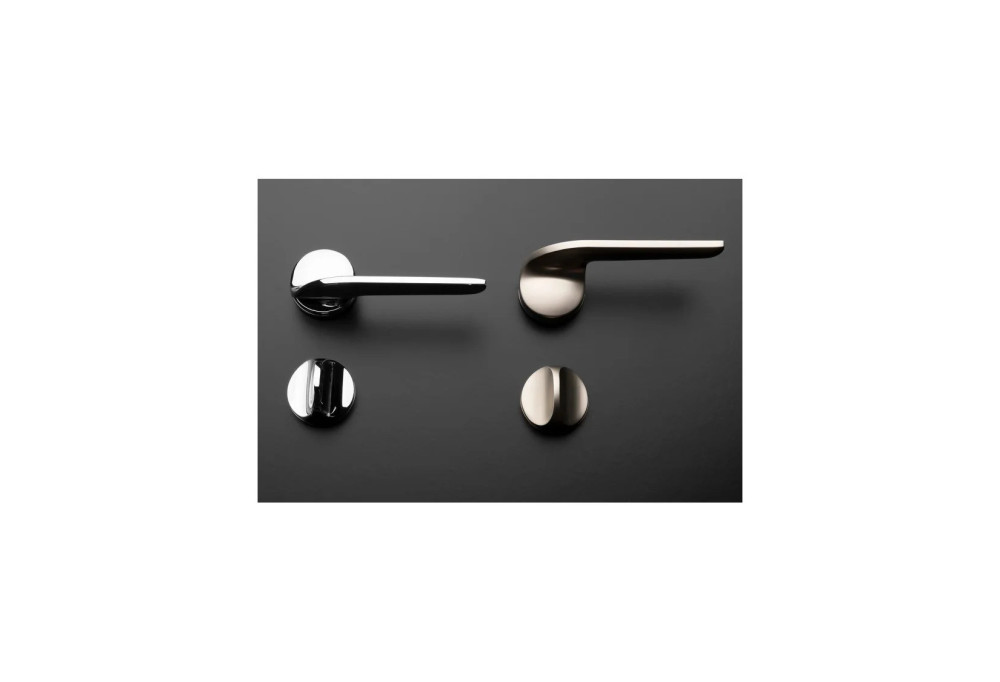
Choosing the right privacy handle!
Are you choosing between a handle fitted with a key lock or a privacy lock for your bathroom? Here are the arguments to help you make the right choice!
Between technical elements and aesthetic considerations, whether you are installing a handle for an interior door or an exterior door, hinged or sliding, understanding the available options in terms of locks, latch bolts, and door hardware in general will be very useful in making your choice. Discover the complete guide to everything you need to know about privacy handles and their accessories.
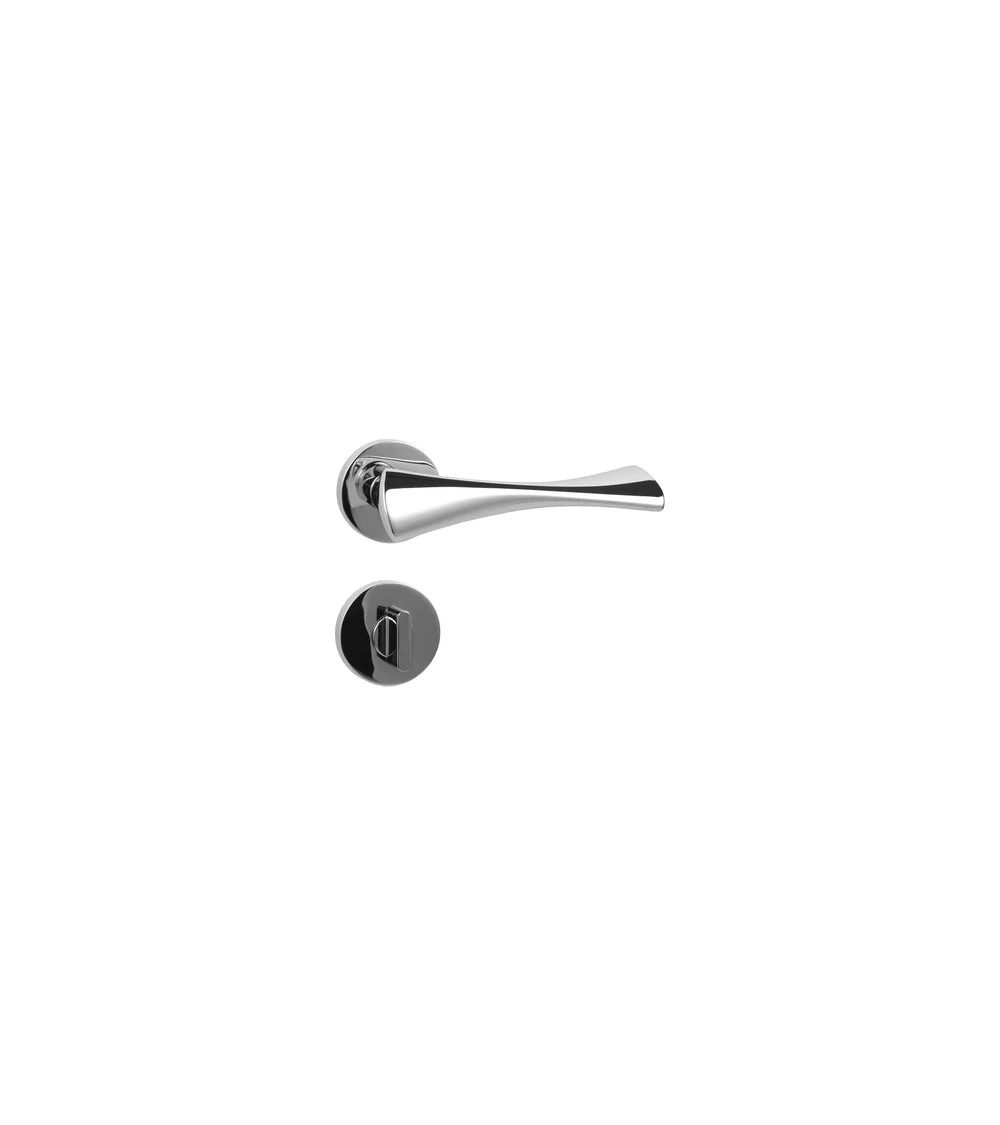
What is a privacy handle?
A privacy handle is an integrated locking system that allows a door to be locked without the use of a key. It commonly consists of a handle combined with a privacy lock.
Privacy handles are used to fit interior doors, often those of bathrooms or toilets, rooms for which functionality and cleanliness are the priority.
Description of the privacy lock mechanism
A privacy lock is a simple locking system designed to block the opening of a door from the inside. It is commonly found on bathroom or toilet doors, where privacy is the priority. Here is a detailed explanation of its mechanism:
1. The main components of the privacy lock
The privacy lock comprises several functional elements:
* The rotary button or latch: located on the inner face of the door, it allows the user to lock or unlock the door with a simple rotation or slide.
* The latch bolt: a mobile metal piece that engages with the strike plate fixed to the door jamb to hold the door in the closed position. Depending on the model, it may be a deadbolt or a half-turn latch bolt.
* The strike plate: fixed to the door frame (door jamb), it receives the latch bolt and enables locking.
* The connecting rod: transmits the movement of the rotary button to the latch bolt, actuating its engagement or withdrawal from the strike plate.
* The free/occupied indicator (optional): present on certain models, it visually displays the status of the door (green for "free", red for "occupied").
* The external unlocking device: often a push button, a screwdriver hole, or a coin slot, it allows the door to be opened from the outside in an emergency.
2. How the mechanism works
* Interior locking
When the user turns the rotary button or operates the latch, the connecting rod pushes the latch bolt forward.
The latch bolt inserts into the strike plate, thereby preventing the door from opening.
* Interior unlocking
By turning the button in the opposite direction, the latch bolt is withdrawn from the strike plate, thereby releasing the door.
This action is smooth and requires no significant effort.
* External unlocking
In an emergency, the emergency release device allows the latch bolt to be operated directly from the outside. For example, a screwdriver or a coin can be inserted into the slot to turn the mechanism and release the latch bolt.
3. Variants of privacy locks
* Integrated rotary button lock: the most common type, this model offers intuitive operation. This type of lock is fitted with a rotary button on the inner rosette, allowing the door to be locked simply. Easy to install and compatible with reversible handles, it is perfect for interior bathroom and family toilet doors.
* Sliding latch lock: simpler, it is suitable for doors where installing a rotary mechanism is difficult.
* WC lock with free/occupied indicator: this system features a visible indicator on the outer rosette, often used with a mortise lock or a recessed mechanism. Very practical for public or family bathrooms, it instantly shows the status of the door, providing clear signage to avoid attempting to open the door when it is occupied.
This lock is ideal for offices or homes welcoming guests.
* Lock integrated into a handle fitting: combines door handle and lock in a single unit for a sleek design.
* Lock with external unlocking: a lock with a small opening allowing a screwdriver or tool to be inserted to unlock the door in an emergency. Safe for families, particularly those with children or people with reduced mobility (PRM), it is also ideal for communal or family dwellings.
Mechanism advantages
* Ease of use: easy to operate for both adults and children.
* Quick installation: little tooling required for surface-mounted or integrated models (a simple screwdriver is sufficient in most cases).
* Security: preserves privacy while offering an emergency unlocking solution.
This mechanism, although relatively basic, is ideal for interior doors requiring occasional and practical locking. For a front door or one requiring enhanced security, other systems such as multipoint or cylinder locks are recommended.

Technical compatibility criteria
Before opting for a privacy lock, please check whether your new handle is suited to your door and your needs!
The type of door
* Interior door: ensure that the chosen privacy lock is compatible with a standard interior door or a sliding door. For example, some models require a specific mechanism for pocket doors.
* Front door or landing door: if you are looking for a lock for a landing or exterior door, opt for a more robust model, although a privacy lock is not ideal for this type of door.
The lock centre distance
The centre distance is the distance between the centre of the handle (axis of rotation of the lever) and the centre of the cylinder or lock. Check that your lock or furniture fitting is compatible with the standard dimensions of your door. Common centre distances are 70 mm or 195 mm for privacy handles.
The type of strike plate and latch bolt
Depending on your door, you will need to choose between a deadbolt lock (more secure) or a half-turn latch bolt, ideal for quick opening and closing. Make sure the strike plate is suited to your door frame.
The door and lock materials
A solid wood, aluminium, or glass door requires suitable fixings. For example, a brass or brushed stainless steel lock is perfect for a designer wooden door, while a stainless steel model is perfectly suited to a metal door.
The reversibility of the lock
Check whether the lock is reversible, meaning it can be used for a door opening to the left or to the right. This simplifies installation and is suitable for interior doors.
PRM Standards
If the lock is intended for a space accessible to people with reduced mobility, choose a model meeting PRM standards. These models allow easy operation and are often fitted with a simplified external unlocking mechanism.
Rosette compatibility and finishes
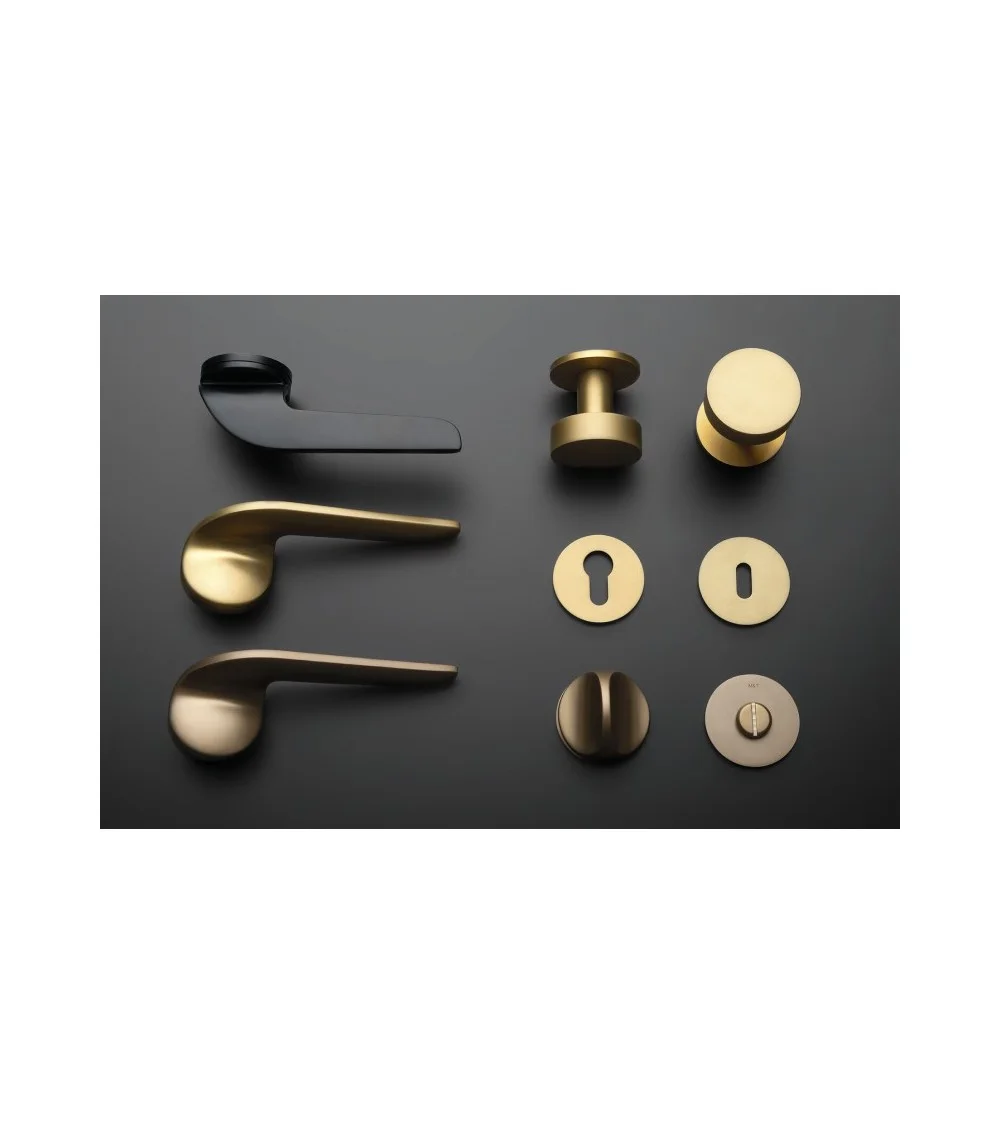
If you already have a door handle installed, check that the privacy lock is compatible with the existing rosette or escutcheon plate. Finishes (chrome, matt black, polished brass, etc.) should also be coordinated for an aesthetic result.
Door hardware now offers handle and rosette models with lock in ultra-designer finishes to enhance the style of your interior décor!
Drilling dimensions and faceplate
For a perfect installation, ensure that the door drilling matches the chosen model. If you are replacing an existing lock, the faceplate dimensions must match to avoid carpentry adjustments.
Comparison table: Handle fitted with a key lock vs. Handle with privacy lock
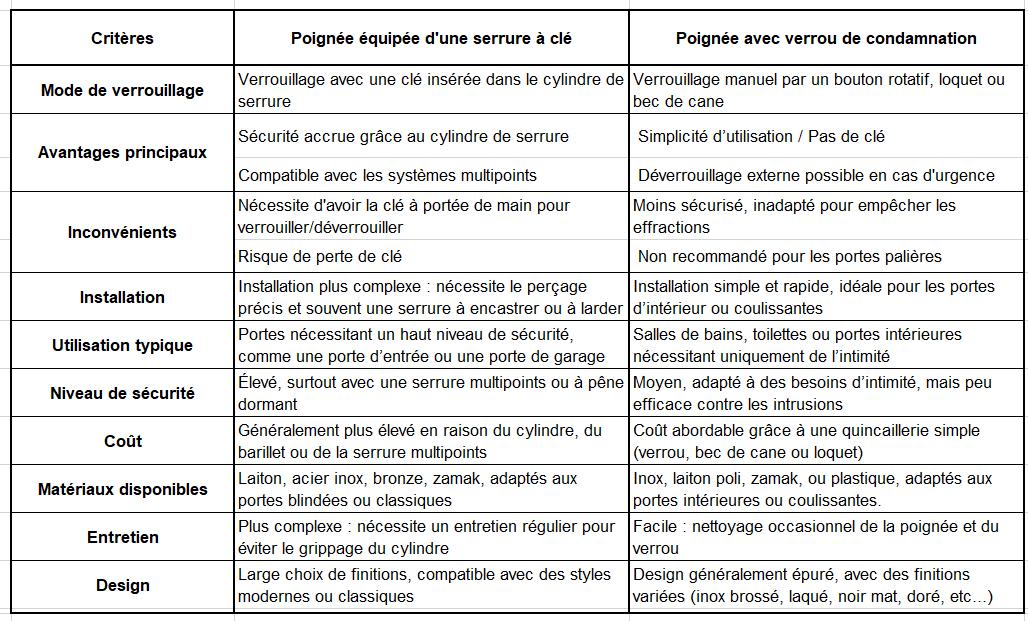
This table allows you to compare these two systems and choose the one that best suits your needs, taking into account criteria such as security, design, or installation. If you would like further details, I can enrich this comparison further!
How do you choose a privacy handle with style?
There is no question of overlooking the style of your interior décor! Door hardware now offers many beautiful privacy handle models! Between noble materials, modern design, and quality finish, you can easily combine security with style!
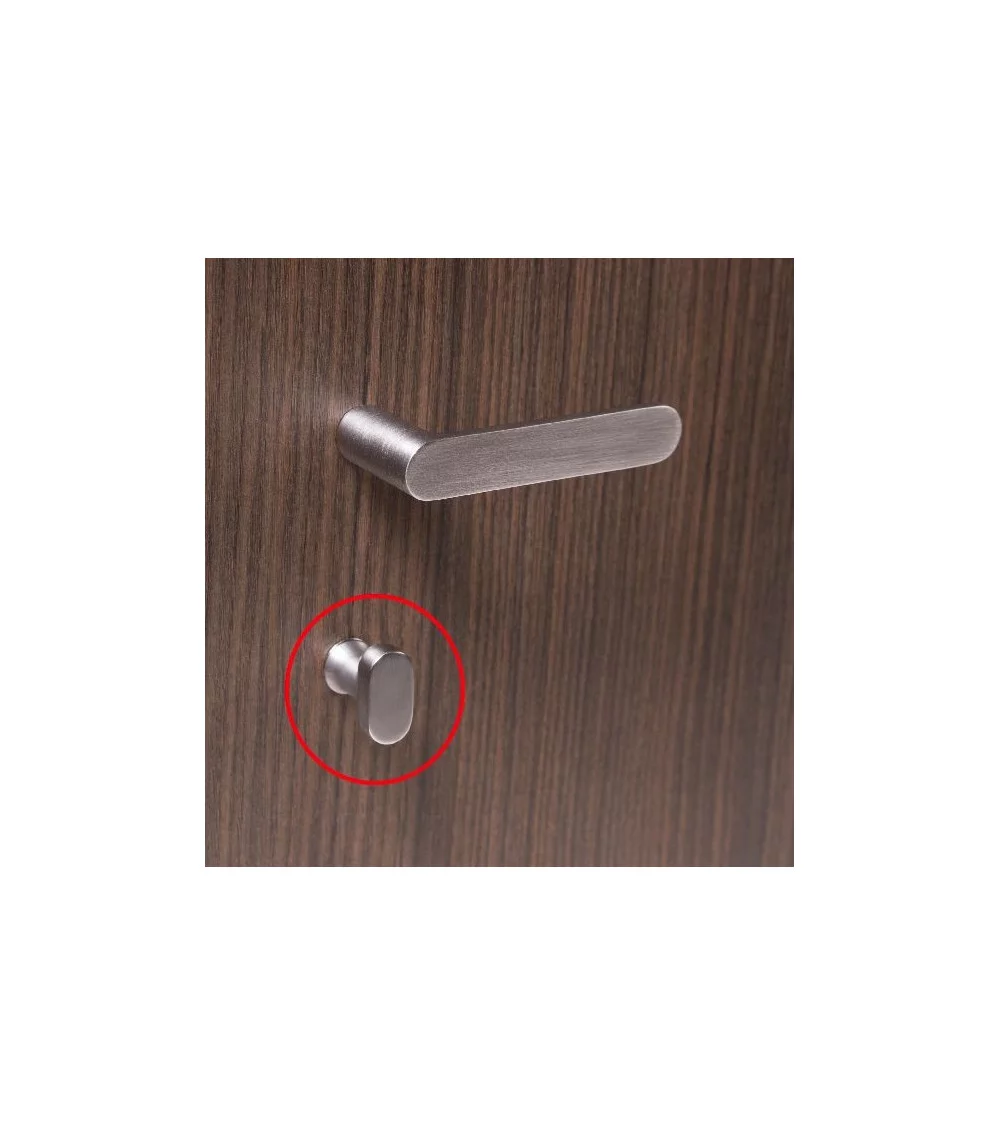
* Choose a durable and aesthetic material
Handles in brushed stainless steel, solid brass, or zamak offer excellent resistance to moisture, while adapting to different styles of interior doors.
* Aesthetics and finishes of rosettes with lock
Ensure harmony with your other locking hardware: choose rosettes in satin chrome, matt black, or lacquered white, according to your preferences. From the most classic to the most colourful, enjoy the wide range of privacy locks available!
* Prefer a quality handle
Security and practicality
A quality lock reduces the risk of break-ins or picking, while allowing smooth door closing.
Durability
Door handles in stainless steel, polished brass, or anodised aluminium offer increased longevity, even in humid environments such as bathrooms.
* Installation
Benefit from expert advice and their informed recommendations to easily choose and install your new handles. For those who are unsure, feel free to consult video tutorials on the easy installation of your door handles!
Is the privacy lock suitable for children?
When it comes to children, using a privacy lock on bathroom or toilet doors presents both advantages and precautions to consider:
Advantages of the privacy lock for children
* Ease of use: young children can easily understand how to use a rotary lock or a privacy button. This allows them to close the door for privacy without having to handle a key.
* Enhanced safety in an emergency: most privacy locks are designed to allow emergency unlocking from the outside, often with a simple tool such as a flat-head screwdriver or a small metal tool. This ensures that if a child becomes locked in, an adult can open the door quickly.
Precautions to take
* Accessibility of the emergency release: ensure that the external unlocking device is easily accessible to adults when needed. This may be a dedicated tool or simply a suitable metal rod, kept nearby.
* Children's education: teach children how to use the privacy lock correctly and emphasise that it should not be used as a game. Children should know that they can ask for help if they find themselves locked in or cannot open the door.
* Appropriate age: for very young children (under 4 years old), it is recommended to opt for locks that do not risk trapping them without an easy means of exit. Some parents even prefer high-mounted latches to restrict access for toddlers.
A well-chosen and correctly installed privacy lock can provide security and privacy for children while allowing parents to remain in control and react quickly if necessary.
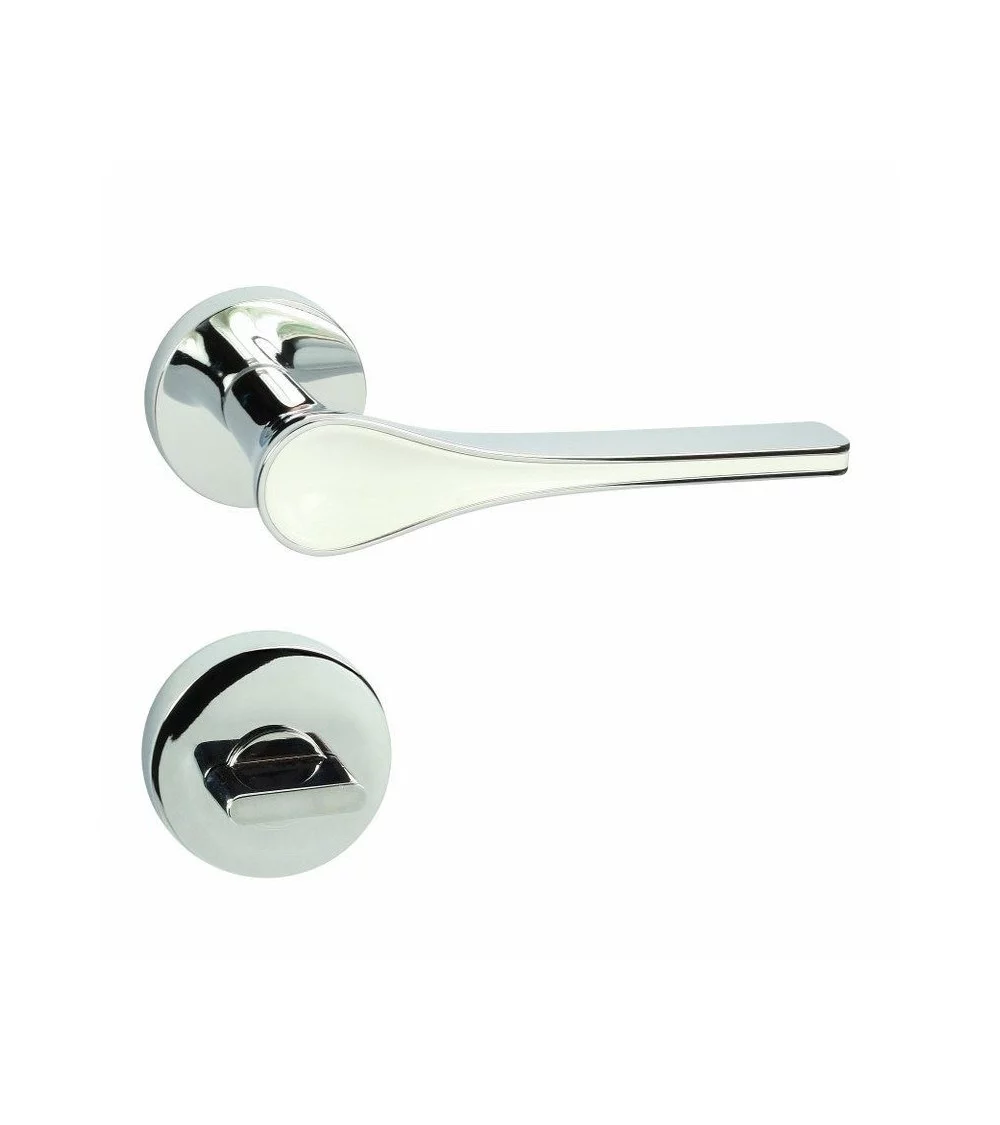
Making the right choice of privacy handles means guaranteeing functional, secure, and aesthetic use for your interior doors.
Discover our models on Milla Poignées to find the one that perfectly meets your needs. Browse a wide range of designer door handles for bathrooms or WC, fitted with high-performance privacy locking systems, such as:
* mortise or surface-mounted locks, perfect for discreet integration.
* WC locks with free/occupied indicators, practical and aesthetically pleasing.
* handle and lock sets in stainless steel, polished brass, or satin steel, suited to modern and classic interiors...
Entrust your projects to the designer handle specialist!
Comments
No comments yet!
Leave your comment